Event
In 19th-century Istanbul, the narrow alleys around the Bazaar district buzzed with the voices of merchants and carriages. But in a quiet house, far from the eyes of the Ottoman guards, something special happened each evening. There, in a warm room with covered windows, Sami Frashëri gathered several Albanian children, sons and daughters of exiles, to secretly teach them their language.
The children sat by the fireplace, their hearts beating fast with excitement and fear. Outside, Istanbul roared, but inside the house a sacred silence reigned. Sami, his eyes shining with love for the homeland, began to speak in a low and gentle voice:
“My children. Never forget that the language you are learning today is among the oldest in the world. Albanian is a sister to Ancient Greek, to Latin, to the language of ancient Persia, to the Sanskrit of India. Many of those languages have dissolved into the dust of books, but our language, blessed as it is, continues to live and breathe.”
The children’s eyes sparkled with curiosity.
“Listen,” Sami continued, “our Pelasgian forefathers spoke this language. Even the names of the gods worshipped by the Greeks and Romans carry traces of Albanian. It has passed through ages and storms without fading, like a river that always finds its way—uniting Gegs and Tosks, Chams and highlanders.”
One of the little boys, his eyes wide, asked with a trembling voice: “But why must we preserve it, teacher?”
Sami smiled, looked at each of them, and said: “Because the sign of a nation is its language. A people who forget their own word dissolve and disappear like salt in water. But we Albanians will never disappear. As long as you speak Albanian, even in secrecy, our nation will live and grow.”
At that moment, the windows trembled softly from the Bosphorus wind, as if the air itself was guarding their secret. The children silently vowed that they would preserve the Albanian language and pass it on to their brothers and sisters, to their children, wherever life would take them.
From that night onward, the word of Sami Frashëri spread from heart to heart. His pupils became other teachers, carrying Albanian to every corner of Istanbul and beyond, all the way to the homeland. And the legend is preserved to this day: “Language is a light that never goes out. Whoever preserves it, preserves the nation.”
Thus, through the secret lessons of our patriots, the Albanian language not only survived but became an immortal symbol of Albanian identity—a cornerstone of our intangible cultural heritage.
The children sat by the fireplace, their hearts beating fast with excitement and fear. Outside, Istanbul roared, but inside the house a sacred silence reigned. Sami, his eyes shining with love for the homeland, began to speak in a low and gentle voice:
“My children. Never forget that the language you are learning today is among the oldest in the world. Albanian is a sister to Ancient Greek, to Latin, to the language of ancient Persia, to the Sanskrit of India. Many of those languages have dissolved into the dust of books, but our language, blessed as it is, continues to live and breathe.”
The children’s eyes sparkled with curiosity.
“Listen,” Sami continued, “our Pelasgian forefathers spoke this language. Even the names of the gods worshipped by the Greeks and Romans carry traces of Albanian. It has passed through ages and storms without fading, like a river that always finds its way—uniting Gegs and Tosks, Chams and highlanders.”
One of the little boys, his eyes wide, asked with a trembling voice: “But why must we preserve it, teacher?”
Sami smiled, looked at each of them, and said: “Because the sign of a nation is its language. A people who forget their own word dissolve and disappear like salt in water. But we Albanians will never disappear. As long as you speak Albanian, even in secrecy, our nation will live and grow.”
At that moment, the windows trembled softly from the Bosphorus wind, as if the air itself was guarding their secret. The children silently vowed that they would preserve the Albanian language and pass it on to their brothers and sisters, to their children, wherever life would take them.
From that night onward, the word of Sami Frashëri spread from heart to heart. His pupils became other teachers, carrying Albanian to every corner of Istanbul and beyond, all the way to the homeland. And the legend is preserved to this day: “Language is a light that never goes out. Whoever preserves it, preserves the nation.”
Thus, through the secret lessons of our patriots, the Albanian language not only survived but became an immortal symbol of Albanian identity—a cornerstone of our intangible cultural heritage.
There is no audio content available. Add an audio URL in the admin panel.
There is no video content available. Add a video URL in the admin panel.
Historical period:
19th Century
Historical overview of the period
In the second half of the 19th century, the Ottoman Empire exercised strict control over national movements within its territories. Education in the Albanian language was forbidden, Albanian books circulated secretly, and teachers who spread the language were often pursued by the authorities.
In this oppressive environment, many Albanian intellectuals living in Istanbul—the cultural and political center of the Empire—became key figures of the National Renaissance. Among them was Sami Frashëri, who not only wrote foundational works on Albanian identity but also defended the idea that language is the foundation of a nation.
Cultural societies such as The Society for the Publication of Albanian Writings were founded in Istanbul, newspapers were published in secrecy, and private lessons in the Albanian language were held—often in conditions identical to those described in your narrative: covered windows, fear mixed with pride, and a deep devotion to spiritual heritage.
Conditions that gave rise to the event
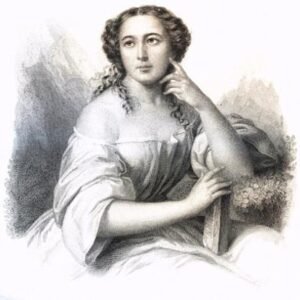
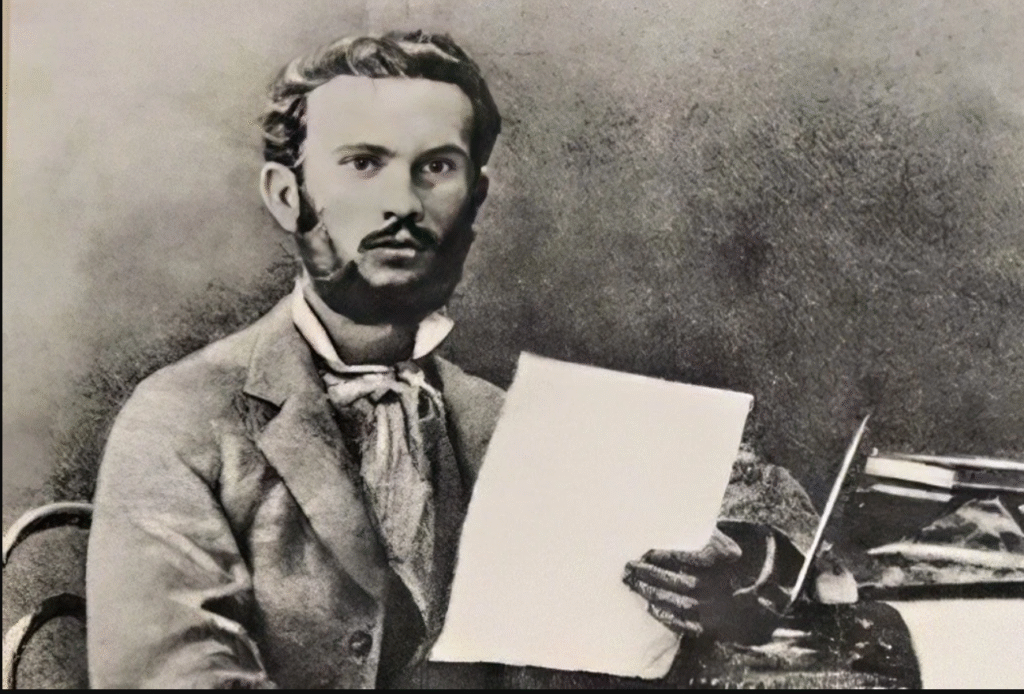
Sami Bey Frashëri, one of the most distinguished personalities of the Albanian nation and of world culture, was born on June 1, 1850, in the village of Frashër in Përmet. He died on June 18, 1904, in Istanbul. He was a prominent Renaissance figure, a great scholar, writer, publicist, and the principal ideologue of the Albanian National Movement.
Sami directed the first Albanian-language journals Drita and later Dituria (Istanbul, 1884–85), where he wrote a large number of articles. For the needs of the Albanian school he authored:
– Alphabet of the Albanian Language (1886),
– Grammar of the Albanian Language (1886),
– Geography (1888),
all in Albanian.
Among his most important works is Albania—What It Was, What It Is, and What It Will Become, published anonymously in Bucharest in 1899. This treatise became the manifesto of the Albanian National Renaissance, the work that synthesized the movement’s program, strategy, and tactics. It expressed the democratic ideals of political and social development, and the advancement of education, culture, and science.
Sami Frashëri also compiled a dictionary of the Albanian language, which remained unpublished, and left behind a manuscript collection of Albanian folk songs.
The event is inspired by passages from Albania—What It Was, What It Is, and What It Will Become.
Message
A call for unity. In the story, Gegs, Tosks, Chams, and highlanders come together in a single word: Albanian.
Today, amid internal divisions, identity debates, and external pressures, this message is more important than ever: language is the bridge that unites us, and the future can only be built together.
Sami’s message remains current: a language survives only if it is spoken with love, learned, and cultivated.
Meaning in Today’s Context
Language is still the foundation of identity. Even though it is no longer forbidden, Albanians face new risks: mass emigration, linguistic assimilation, globalization, and impoverished use of the language on social media.
The role of the Albanian diaspora. Just like in 19th-century Istanbul, today millions of Albanians live abroad. Their children often risk losing contact with the language.
This story serves as a call to continue teaching Albanian within families, in community schools, and through online platforms.
Intangible heritage must not be taken for granted. Language, customs, songs, epics—all are alive only as long as we care for them. Sami’s secret lesson is a metaphor for everyone who today works with passion to preserve Albanian culture: scholars, teachers, artists, activists, and cultural platforms.
Bibliography
- (Albania—What It Was, What It Is, and What It Will Become) — Sami Frashëri, 1899