Event
Albanian Silversmiths and Filigree: Craftsmanship, Identity and Heritage
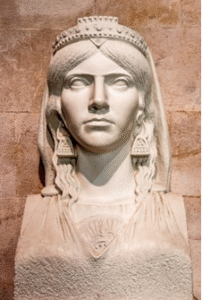
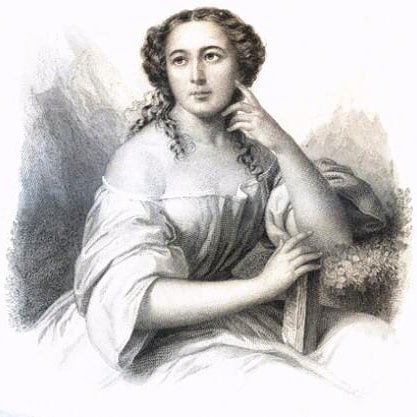
Spring of 1881. The city of Shkodra hummed with the sounds of the marketplace teaming of crowds moving like sea currents through its narrow-cobbled streets. The silversmiths’ workshops glowed like small hearths of light. The flicker of the furnaces, the gleam of thin silver sheets, the soft hiss of wires twisting over moulds… all gave these workshops an air of quiet magic. A sense of anticipation filled the air. Word had spread across the city: three hundred young women of Shkodra had decided to offer Princess Elena Gjika (Dora d’Istria) a writing pen made entirely of silver filigree. For them, this was more than a gift. Dora d’Istria — writer, publicist, and tireless advocate of the Albanian cause and women’s rights — was to receive a token of gratitude, inscribed in the silent language of her homeland.
The city’s finest masters were summoned. The workshop of Kolë Prenushi, known for its lace-like filigree, became a shared stage of artistry. Day and night, the craftsmen drew silver wire to the fineness of a hair, twisting it into spirals, stars and rosettes. Each motif carried a hidden wish for the princess: courage for free speech, light for free thought, blessing for the nation. When the pen was finished, it seemed born of air and light — a “silver lace” that shimmered like the written word itself. Its light structure was an intricate weaving of lines and voids, where transparency became part of the design — much like free thought, flowing through and beyond boundaries.
The day of the presentation became a civic celebration. Three hundred girls, dressed in traditional costume, carried the pen through the stone streets of Shkodra, singing songs of gratitude. The sunlight fell upon the silver like rippling water, and to all who watched, the object was no longer merely a writing tool — it was a living letter from Shkodra to Europe.
Spring of 1881. The city of Shkodra hummed with the sounds of the marketplace teaming of crowds moving like sea currents through its narrow-cobbled streets. The silversmiths’ workshops glowed like small hearths of light. The flicker of the furnaces, the gleam of thin silver sheets, the soft hiss of wires twisting over moulds… all gave these workshops an air of quiet magic. A sense of anticipation filled the air. Word had spread across the city: three hundred young women of Shkodra had decided to offer Princess Elena Gjika (Dora d’Istria) a writing pen made entirely of silver filigree. For them, this was more than a gift. Dora d’Istria — writer, publicist, and tireless advocate of the Albanian cause and women’s rights — was to receive a token of gratitude, inscribed in the silent language of her homeland.
The city’s finest masters were summoned. The workshop of Kolë Prenushi, known for its lace-like filigree, became a shared stage of artistry. Day and night, the craftsmen drew silver wire to the fineness of a hair, twisting it into spirals, stars and rosettes. Each motif carried a hidden wish for the princess: courage for free speech, light for free thought, blessing for the nation. When the pen was finished, it seemed born of air and light — a “silver lace” that shimmered like the written word itself. Its light structure was an intricate weaving of lines and voids, where transparency became part of the design — much like free thought, flowing through and beyond boundaries.
The day of the presentation became a civic celebration. Three hundred girls, dressed in traditional costume, carried the pen through the stone streets of Shkodra, singing songs of gratitude. The sunlight fell upon the silver like rippling water, and to all who watched, the object was no longer merely a writing tool — it was a living letter from Shkodra to Europe.
There is no audio content available. Add an audio URL in the admin panel.
There is no video content available. Add a video URL in the admin panel.
Historical period:
From the Late Middle Ages to the early 20th century – with its height during the 18th–19th centuries, continuing into the 20th century and beyond through family-run artisan workshops.
Historical overview of the period
Silversmithing has been one of the pillars of Albanian urban craftsmanship and a symbol of the fusion between aesthetic taste and urban economy. From the late Middle Ages to the 20th century, cities such as Shkodra, Prizren, Gjakova, Elbasan, and Berat became centers for producing luxurious gold and silver objects, intended both for everyday use and ceremonial purposes.
With the growth of cities, their economic and political roles, and the organization of guilds, workshops multiplied and specialized to such an extent that by the late 17th century, many families in Shkodra and Elbasan lived from this craft, while in Prizren, around forty-seven workshops were registered in the city center. The major markets of the 18th–19th centuries, such as the bazaar of Shkodra, reflect the role of these cities as trade hubs for precious goods and refined handmade works.
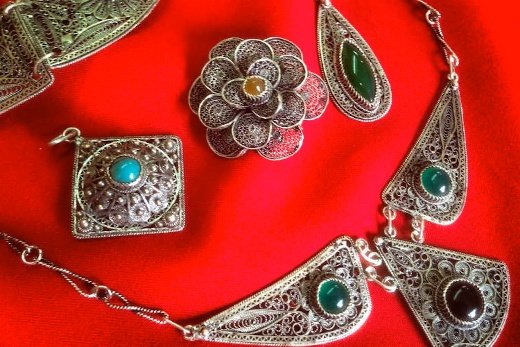
In silversmiths’ workshops, various techniques were used — hammering metal sheets on molds, casting, engraving, incising, granulation, and working with fine wire. The artistic peak and distinctive hallmark became filigree work, a “lace-like” creation made from extremely thin silver or gold threads, twisted and delicately soldered together into intricate patterns.
Conditions that gave rise to the event
The rise of Albanian silversmithing as a vital branch of urban economy is closely tied to the expansion of trade, the circulation of precious metals and the development of an urban culture that valued finely crafted objects for both everyday use and ceremonial or religious functions.
The formation of guilds (esnafs) with defined rules ensured long-standing apprenticeships, professional standards and consistent quality. Motifs and techniques from the broader Balkan and Mediterranean world were absorbed and reinterpreted according to local taste, resulting in a distinct Albanian repertoire of forms and ornaments that gave the craft a unique artistic identity.
Message
Albanian filigree remains a living heritage and a cultural signature. Family workshops in Shkodra, Prizren, Gjakova, Elbasan and Berat continue to craft jewelry and objects using age-old techniques, while contemporary artists reinterpret filigree in modern jewelry and design. It serves as a symbol of national identity, featured in diplomatic gifts and cultural souvenirs, and safeguarded through museums and artisan centers, as also initiatives to register it as intangible cultural heritage under UNESCO. Filigree thus bridges the historical memory of Albania’s cities with the creative economy of the 21st century, standing as a lasting emblem of artistry, cultural identity and the human hand’s enduring mastery.
Meaning in Today’s Context
Today, Albanian filigree remains a living heritage and a cultural trademark, where family workshops in Shkodra, Prizren, Gjakova, Elbasan, and Berat continue to create jewelry and objects using centuries-old techniques, while artists reinterpret it in contemporary jewelry and art. It serves as a language of national representation, used in protocol gifts and tourist souvenirs, and is protected through museums, artisan centers, and initiatives to register it as intangible heritage with UNESCO. Thus, filigree connects the memory of Albanian cities with the creative economy of the 21st century, remaining a symbol of aesthetic taste, cultural identity, and craftsmanship tied to the human hand.
Bibliography
- Shkodra, Zija. Qyteti shqiptar gjatë Rilindjes Kombëtare [The Albanian city during the National Renaissance]. Akademia e Shkencave e Shqipërisë, Instituti i Historisë, Tiranë, 1984.
- Shqipërisë, Instituti i Historisë, Tiranë 1984
- Historia e popullit shqiptar [History of the Albanian People]. Akademia e Shkencave e Shqipërisë, Instituti i Historisë, Botimet Toena, Tiranë, 2002.
- Botimet Toena, Tiranë 2002