Event
In the city of a thousand windows, within the Castle of Berat, people have long spoken in hushed tones of two sacred and rare books — written in golden letters upon purple parchment, preserved as a holy trust. It was said that these manuscripts were not merely words, but light passing through the silence of centuries.
In 1865, the French traveler Pierre Batiffol arrived in Berat and discovered these manuscripts, describing them with profound admiration. Yet their story had begun long before.
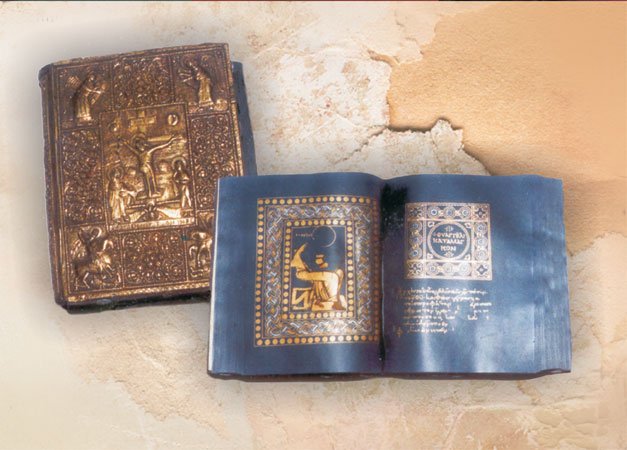
In 1356, when Serbian troops burned down Berat, the priest Skuripeqi and the monk Theodhulos filled several sacks with manuscripts and hid them within the recesses of the church galleries to save them from the flames. Thus way, these manuscripts, known as the Codices of Berat, were to survive the First World War and elude Austrian forces trying to get a hold of them. Then they endured the Italian occupation of 1939 and would again elude the following German occupation and soldiers seeking these relics.
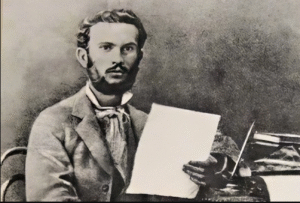
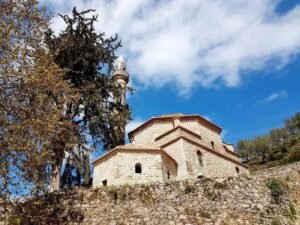
One of the silent guardians of this heritage was Father Papapavli, who revealed to his son, Nasi, the secret place where the codices were hidden — beneath a wooden trapdoor in the Church of the Holy Trinity. After his father’s death, Nasi Papapavli returned from emigration and, in 1956, knocked on the doors of the Institute of Sciences in Tirana. He met Professor Aleks Buda, to whom he recounted the story. Professor Buda took the matter seriously, following through with the local authorities in Berat and even visiting the city himself several times in search of the hidden treasure.
But the Codices would not be immediately found. For fifteen years, Nasi Papapavli came to the Institute every two weeks, always asking the same question: “Have you learned anything about the Codices?”
Finally, in 1968, they were discovered in one of the churches within the fortress — wrapped in cloth, damaged by humidity, yet spiritually untouched. They were sent to China for restoration and, upon their return, were deposited in the Central State Archive, where they are still preserved to-the-day.
On January 28, 1972, the newspaper Zëri i Popullit published an article by Prof. Aleks Buda, announcing the discovery and emphasizing the Codices’ historical and cultural significance. He mentioned with deep respect the “elder patriot” Nasi Papapavli, who had kept the vow alive for more than a decade.
When Papapavli’s son later thanked Buda, the professor replied with a simple yet weighty sentence: “I am freed from a heavy moral debt toward your father. He never gave up for fifteen years. He came without fail…”
In 1865, the French traveler Pierre Batiffol arrived in Berat and discovered these manuscripts, describing them with profound admiration. Yet their story had begun long before.
In 1356, when Serbian troops burned down Berat, the priest Skuripeqi and the monk Theodhulos filled several sacks with manuscripts and hid them within the recesses of the church galleries to save them from the flames. Thus way, these manuscripts, known as the Codices of Berat, were to survive the First World War and elude Austrian forces trying to get a hold of them. Then they endured the Italian occupation of 1939 and would again elude the following German occupation and soldiers seeking these relics.
One of the silent guardians of this heritage was Father Papapavli, who revealed to his son, Nasi, the secret place where the codices were hidden — beneath a wooden trapdoor in the Church of the Holy Trinity. After his father’s death, Nasi Papapavli returned from emigration and, in 1956, knocked on the doors of the Institute of Sciences in Tirana. He met Professor Aleks Buda, to whom he recounted the story. Professor Buda took the matter seriously, following through with the local authorities in Berat and even visiting the city himself several times in search of the hidden treasure.
But the Codices would not be immediately found. For fifteen years, Nasi Papapavli came to the Institute every two weeks, always asking the same question: “Have you learned anything about the Codices?”
Finally, in 1968, they were discovered in one of the churches within the fortress — wrapped in cloth, damaged by humidity, yet spiritually untouched. They were sent to China for restoration and, upon their return, were deposited in the Central State Archive, where they are still preserved to-the-day.
On January 28, 1972, the newspaper Zëri i Popullit published an article by Prof. Aleks Buda, announcing the discovery and emphasizing the Codices’ historical and cultural significance. He mentioned with deep respect the “elder patriot” Nasi Papapavli, who had kept the vow alive for more than a decade.
When Papapavli’s son later thanked Buda, the professor replied with a simple yet weighty sentence: “I am freed from a heavy moral debt toward your father. He never gave up for fifteen years. He came without fail…”
There is no audio content available. Add an audio URL in the admin panel.
There is no video content available. Add a video URL in the admin panel.
Historical period:
6th–14th centuries CE
Historical overview of the period
During the early and late Middle Ages (6th–14th centuries), Berat was one of the most important ecclesiastical and cultural centers in southern Albania. Under Byzantine influence, the city experienced a flourishing of religious and intellectual life. Its monasteries and churches became scriptoria (centers of writing and illumination) where sacred texts were translated, copied and richly decorated. These manuscripts carried theological, liturgical and linguistic knowledge – while being venerated by locals as holy relics, often serving as vehicles for the spread of Christian teachings across the region. Despite successive invasions and political upheavals, Berat retained its identity as a spiritual stronghold of Orthodox Christianity within Albanian territories.
Conditions that gave rise to the event
The Codices of Berat were handwritten on parchment and paper by learned monks and clerics working with exceptional devotional discipline. The commitment of the Orthodox clergy, the geographical isolation of Berat’s citadel, and the deep reverence for the written word played a crucial role in their preservation. During times of invasion and persecution, the codices were carefully hidden, guarded by both the clergy and the faithful as a shared sacred trust – passed from generation to generation, oftentimes in utter secrecy and silence ensuring their survival through centuries of turmoil.
Of all the surviving manuscripts of Berat, the following two are the oldest and most precious:
• The Purple Codex of Berat (Codex Purpureus Beratinus) dating to the 6th century – containing fragments from the Gospels of Matthew and Mark, written on purple parchment in golden and silver letters.
• The Golden Codex of Anthimos (Codex Aureus Anthimi) dating to the 9th century – including the four Gospels in their entirety, written with extraordinary care and ornate illumination.
These codices represent a most precious and unique European heritage in terms of technique, content and preservation. They bear witness to Albania’s early connection with Eastern Christian culture and grant Berat the distinction of being a museum city of spiritual heritage in the Balkans.
Message
In today’s world dominated by consumerism and social media, whereby words lose meaning and history fades into neglect, the Codices of Berat remind us of the essential duty to protect cultural memory. They call us to preserve identity through knowledge, language and nurturing of enduring values that transcend time. More than museum artifacts, they are mirrors of continuity — reflecting who we Albanians have been in the past and at present risk to forget. In an age of global uniformity and cultural erosion, their deepest message lies in the awareness that every generation bears a responsibility not only to know, but also to safeguard the spiritual memory of its people.
Bibliography
- Buda, Aleks. “Zbulimi i dy kodikëve të Beratit” [“The discovery of the two codices of Berat”] Zëri i Popullit, January 28, 1972.
- Sinani, Shaban. Berat, Beratinus, Buhara, Naimi. Tiranë, 2004.
- Polovina, Ylli. “Kush i Zbuloi Kodikët e Beratit” [“Who discovered the Codices of Berat”]. Shqiptarja.com. https://shqiptarja.com/lajm/misteri-kush-i-zbuloi-kodiket-e-beratit-psalti-papapavli-aleks-buda-apo-sigurimi-i-shtetit.
- Sahatçiu, Parashqevi. “Enigma e kodikëve të Beratit. Si arriti t’i shtjerë në dorë Sigurimi i Shtetit” [“The enigma of the Codices of Berat: How the State Security managed to seize them”]. Gazeta Shqiptare, supplement “Milosao,” June 12, 2011.