Event
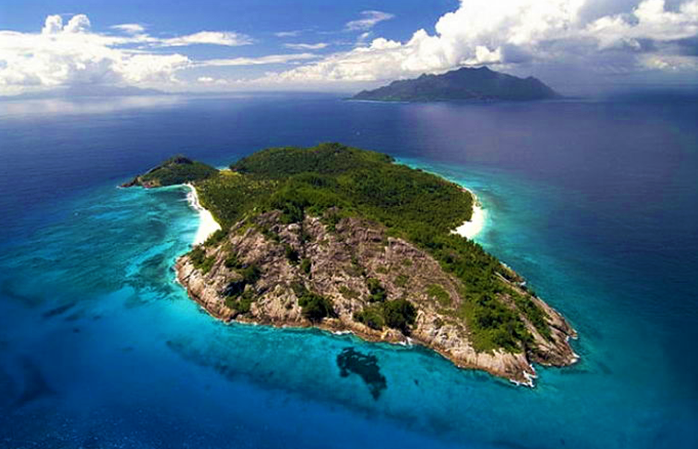
The elders of Tragjas tell the story that, once upon a time, when Sazan had neither wires nor walls nor weapons, there lived in the village a maiden with eyes like the sea and a voice like the nightingale’s. She fell in love with a foreign sailor who often came on a merchant ship anchored in the bay of Vlora. They met in secret among the thickets of Karaburun where she tended her flock.
But her family betrothed her to an older man from Dukat — a good man, they said. No one asked her opinion, no one listened to her. Upon learning that her marriage was being arranged against her will, she decided to flee with the man she loved. She wrote a letter and left it upon her pillow. One quiet June night, she boarded a small boat with her beloved and sailed to the island of Sazan.
Discovering that she was gone, her family raised the village in alarm. It was soon clear where the fugitives had gone — there was nowhere else to hide but on Sazan. The men gathered, took up arms and set out on their boats.
The young couple, weary from the voyage, had built a small shelter on a rocky ridge. They lit a small fire and fell asleep — free for the first time. But dawn never came for them. In the darkness, the men landed on the island, found the two asleep and killed them in utter silence, without a word. They buried them in a shallow pit, covered with white stones gathered from the shore. Then they returned, sealing what happened with a command: “Never be it spoken of again.”
But words cannot be chained. Three weeks later, a shepherd boy from Tragjas swore he had seen a woman in a white dress standing on the highest peak of Sazan, gazing silently toward the mainland.
The next day, a sudden warm rain fell upon the island, though the sky utterly cloudless. It seemed as if the heavens were weeping. It was mid-July. Since then, whenever such a rain falls over Sazan in the heat of summer, the elders whisper, “She is crying.”
And whenever rainless white clouds gather above the island, people murmur softly, “Sazan does not speak — for if it did, its words would cut straight into our souls.”
But her family betrothed her to an older man from Dukat — a good man, they said. No one asked her opinion, no one listened to her. Upon learning that her marriage was being arranged against her will, she decided to flee with the man she loved. She wrote a letter and left it upon her pillow. One quiet June night, she boarded a small boat with her beloved and sailed to the island of Sazan.
Discovering that she was gone, her family raised the village in alarm. It was soon clear where the fugitives had gone — there was nowhere else to hide but on Sazan. The men gathered, took up arms and set out on their boats.
The young couple, weary from the voyage, had built a small shelter on a rocky ridge. They lit a small fire and fell asleep — free for the first time. But dawn never came for them. In the darkness, the men landed on the island, found the two asleep and killed them in utter silence, without a word. They buried them in a shallow pit, covered with white stones gathered from the shore. Then they returned, sealing what happened with a command: “Never be it spoken of again.”
But words cannot be chained. Three weeks later, a shepherd boy from Tragjas swore he had seen a woman in a white dress standing on the highest peak of Sazan, gazing silently toward the mainland.
The next day, a sudden warm rain fell upon the island, though the sky utterly cloudless. It seemed as if the heavens were weeping. It was mid-July. Since then, whenever such a rain falls over Sazan in the heat of summer, the elders whisper, “She is crying.”
And whenever rainless white clouds gather above the island, people murmur softly, “Sazan does not speak — for if it did, its words would cut straight into our souls.”
There is no audio content available. Add an audio URL in the admin panel.
There is no video content available. Add a video URL in the admin panel.
Historical period:
Mythical and oral traditions about Sazan Island date back to the Illyrian and Roman periods (4th century BCE – 3rd century CE), though its reputation as a “cursed” or “forbidden island” took shape especially during the Ottoman era and was reinforced throughout the 20th century.
Historical overview of the period
In antiquity, Sazan served as a refuge for sailors and Roman soldiers, later becoming a strategic point controlling passages between the Adriatic and Ionian seas. Under Ottoman rule, the island remained largely uninhabited, reserved for military use. During the 20th century — first under the Kingdom of Albania and later under the Communist regime — Sazan was transformed into a heavily fortified military base, closed off to civilians. The legends of silence, disappearance and accursing grew as popular attempts to explain the absence of life in such a beautiful place.
Conditions that gave rise to the event
The island’s long-standing isolation, the prohibition of access to ordinary citizens and the total lack of civil life turned Sazan into a space detached from the ordeals of time and people. It came to be perceived as the “deaf island” – devoid of sound, light or memory. This timeless silence, mingled with mystery and unexplained tales, gave rise to one of the most powerful figures of Albanian folklore – “the island that does not speak”, a place that guards deep secrets and punishes those who dare to disturb it, whether in body or in spirit.
Message
The island of Sazan embodies the paradox of forbidden beauty — a paradise that cannot be touched. Its mixture of military history, political isolation and nature’s wilderness has created a space decoupled, as it were, from human time. Legends surrounding the island reflect both fear and reverence for mysterious places and reveal the power of collective memory to protect untouched landscapes through myth.
Meaning in Today’s Context
The meaning today is the freedom to decide your own fate, without leaving it in the hands of others. Even today, arranged marriages still exist, and parents still marry off their children without asking them, often contributing to unhealthy family situations. Nowadays, the decision to unite lives and create a family must be made entirely by free will.
Bibliography
- Tirta, Mark. Mitologjia ndër shqiptarë [Mythology among the Albanians]. Toena, Tiranë, 2004 — on popular beliefs about isolated spaces and islands as supernatural or cursed realms.
- Archives of the Institute of Popular Culture (1970–1985), ethnographic interviews collected in Karaburun, Tragjas, and Dukat, documenting local legends about Sazan as the “silent” or “forbidden” island.
- Oral traditions from the regions of Orikum and Dhërmi, published in cultural journals such as Kultura Popullore and Gjurmime Albanologjike — including accounts of the “lights on the sea,” the “four trapped souls,” and the symbolism of restless spirits tied to Sazan.