Event
In a remote mountain village, where the shadows of old trees covered the paths and the murmur of flowing streams mingled with the song of nightingales, there lived a people who listened to nature as they would heed a parent or a saint. They walked through the forest with great care, touched no branch for no reason and never raised their voices in the grove for, as the elders said, “that is where the god of the animals rests.” In that place, everything was believed to have a soul: the earth, the grass, the water — even the stones. But above all else one creature was never to be harmed — the roe deer. They called it “the blessed one of the forest” and “the spirit that sees but does not speak.”
The oldest among them, old Dodë, remembered a distant summer when his grandfather had told him of a roe deer that once appeared near the mountain hut. It had come down alone, having left its herd, fearless –quenching the thirst in the rushing spring, to then return to the woods without turning the head back to looking. “Do not touch it,” the grandfather had said. “It is sacred. It comes in times of peace or when men have forgotten to fear their own selves.”
But time passes — and with it comes forgetting. Rituals become habit, habits grow old, and memories fall away like autumn leaves. One summer, when water was scarce and the livestock weakened, the young men of the village decided to venture higher into the mountains to hunt. Among them was Leka, a quiet and thoughtful youth who had often heard people call the roe deer “a sacred creature,” though sometimes also “a rare meat for the table.” It had been years since anyone had seen a roe deer in those parts and the forest seemed to call them.
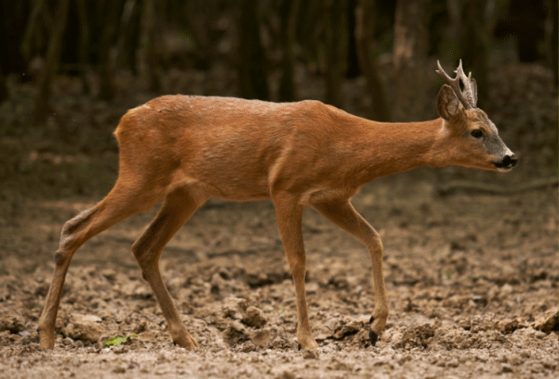
After a long day of tracking in the depths of the densest woods — where sunlight barely broke through the leaves — a roe deer appeared. Graceful, slender-necked and gleaming-skinned, it looked straight at the hunters and did not move. It showed no fear. Its stillness was unsettling.
“It’s not prey — it’s an omen,” murmured someone.
But a shot rang out. A single crack — and the roe deer fell. Silence followed. Leka, who had pulled the trigger, was the first to approach. The deer was not yet dead. Its breath trembled, its eyes teared. They were eyes other than those of an animal. The were eyes that questioned and seemed to probe into the soul.
“He’s crying,” whispered Leka and his blood froze. He knelt beside the creature and said nothing. Not a word even when his fellows called him to lift the body. Not even when they urged him to celebrate. That evening, by the fire, as the meat roasted and cups clinked, Leka sat apart and spoke only one sentence: “Can’t you feel it? Something that was with us — is now gone.”
These words demanded no further elaboration. From that night onwards, no one in the village ever went hunting for roe deer again. Nor did anyone raise a gun against the wild goats which at times came nearby at the break of dawn. When they passed through the shaded grove, they walked with bowed heads and whispered, “There, in its shadow, the roe deer awaits not to be forgotten.”
.” The mountain understood. A year later, when the grass grew tall and green, old Dodë saw another roe deer pause at the very same brook. A different deer, surely — yet it carried the same serenity. A being that asked for nothing, merely that it not be harmed.
Since that day, no one in that village has ever raised the hand against a roe deer. When outsiders come to hunt, the locals tell them the story of The Broken Feast and say: “The roe deer is not meat. It is sacred. If you kill it, you have stepped upon your very self.”
The oldest among them, old Dodë, remembered a distant summer when his grandfather had told him of a roe deer that once appeared near the mountain hut. It had come down alone, having left its herd, fearless –quenching the thirst in the rushing spring, to then return to the woods without turning the head back to looking. “Do not touch it,” the grandfather had said. “It is sacred. It comes in times of peace or when men have forgotten to fear their own selves.”
But time passes — and with it comes forgetting. Rituals become habit, habits grow old, and memories fall away like autumn leaves. One summer, when water was scarce and the livestock weakened, the young men of the village decided to venture higher into the mountains to hunt. Among them was Leka, a quiet and thoughtful youth who had often heard people call the roe deer “a sacred creature,” though sometimes also “a rare meat for the table.” It had been years since anyone had seen a roe deer in those parts and the forest seemed to call them.
After a long day of tracking in the depths of the densest woods — where sunlight barely broke through the leaves — a roe deer appeared. Graceful, slender-necked and gleaming-skinned, it looked straight at the hunters and did not move. It showed no fear. Its stillness was unsettling.
“It’s not prey — it’s an omen,” murmured someone.
But a shot rang out. A single crack — and the roe deer fell. Silence followed. Leka, who had pulled the trigger, was the first to approach. The deer was not yet dead. Its breath trembled, its eyes teared. They were eyes other than those of an animal. The were eyes that questioned and seemed to probe into the soul.
“He’s crying,” whispered Leka and his blood froze. He knelt beside the creature and said nothing. Not a word even when his fellows called him to lift the body. Not even when they urged him to celebrate. That evening, by the fire, as the meat roasted and cups clinked, Leka sat apart and spoke only one sentence: “Can’t you feel it? Something that was with us — is now gone.”
These words demanded no further elaboration. From that night onwards, no one in the village ever went hunting for roe deer again. Nor did anyone raise a gun against the wild goats which at times came nearby at the break of dawn. When they passed through the shaded grove, they walked with bowed heads and whispered, “There, in its shadow, the roe deer awaits not to be forgotten.”
.” The mountain understood. A year later, when the grass grew tall and green, old Dodë saw another roe deer pause at the very same brook. A different deer, surely — yet it carried the same serenity. A being that asked for nothing, merely that it not be harmed.
Since that day, no one in that village has ever raised the hand against a roe deer. When outsiders come to hunt, the locals tell them the story of The Broken Feast and say: “The roe deer is not meat. It is sacred. If you kill it, you have stepped upon your very self.”
There is no audio content available. Add an audio URL in the admin panel.
There is no video content available. Add a video URL in the admin panel.
Historical period:
From Antiquity to the 20th century
Historical overview of the period
In Albanian tradition, especially in mountainous and rural areas where life was closely connected to nature, there was a deep sensitivity toward animals and the surrounding landscape. From pre-Christian periods until the end of the 20th century, Albanians cultivated myths and customs that embodied an early form of cultural ecology, a respect for creatures and places considered sacred. Certain animals, such as the roe deer, doe, or goat, as well as large trees growing near the mountain pastures where livestock rested, represented untouchable and sacred symbols linked to the divine world or to the fate of the community.
Conditions that gave rise to the event
Traditional Albanian society, faced with the challenges of survival in a harsh yet naturally rich environment, built a symbolic and normative system that served as a shield for preserving natural balance. Beyond their mythical and religious function, these prohibitions and superstitions also served as mechanisms to preserve the sources of livelihood: water, forests, livestock, and wild animals. The killing of certain animals, such as the roe deer, was forbidden because of its grace and calm, innocent behavior, while wild goats and does were protected as carriers of prosperity and fertility. Likewise, in mountain pastures, those quiet and shaded areas where livestock rested during the summer, noise was not allowed, livestock could not be slaughtered, and the trees shading these places could not be cut down. These were not only sacred areas, but also ecologically essential for the life cycle of shepherds and living creatures.
The story “The Hunt of the Highlanders” by Kostandin Kristoforidhi is one of the most touching narratives explaining this relationship between humans and nature. In it, a group of highlanders sets out on a hunt and, after many efforts, manages to kill a roe deer. The usual joy of the hunt fades immediately when one of the hunters approaches and sees that the wounded roe deer “cries like a human.” This painful scene becomes a moral turning point for the hunter, who expresses regret, saying: “I wish I had not killed it.” This moment is a powerful ethical and philosophical appeal that separates the world of instinct from that of conscience. Here, the roe deer is no longer prey, but a being with sensitivity, made sacred by the very force of the pain it displays. Through this narrative, Kristoforidhi leaves us with a powerful myth for all times: nature, if not treated with respect, becomes a source of physical and spiritual suffering for humanity itself.
Besides the roe deer, in the mountainous areas of Albania there were also other taboos that forbade the killing of wild goats or does, especially when they appeared alone near the village or were pregnant. People of the time believed in the protective and healing power of these animals. Likewise, in the region of Mirdita, ethnologist Mark Tirta recounts that the large trees growing in the mountain pastures had a mystical status, and therefore they could not be used as firewood, should not be damaged, and sometimes were even offered symbolic sacrifices.
These customary rules, although they do not directly mention the roe deer, carry similar ideas about the limits of acceptable behavior toward nature. The sanctification of trees or animals was essentially an ecological code transmitted orally.
Message
The myth of the sacredness of the roe deer and the folk tales remind us that humans are not masters over nature, but part of it. The killing of the roe deer, instead of bringing triumph, brings regret. This is a profound moral lesson that emphasizes the need for sensitivity, respect, and self-restraint in relation to nature. This cultural heritage conveys important values for our relationship with the environment, where protecting an animal or a tree is an act that also protects the inner balance of the human being.
Meaning in Today’s Context
In today’s world, when nature has become an object of destruction by human hands, when parks are demolished to make way for buildings, when forests disappear and burn due to negligence, when animal habitats are damaged and destroyed — this story reminds us that animals are not only beings with souls, but also sacred creatures. Animals do not seek revenge, yet a person can never find peace after killing an innocent being. Today, just as centuries ago, this story carries the same message: nature is sacred and must be protected.
Bibliography
- Kristoforidhi, Kostandin. The Hunt of the Highlanders, State Publishing and Distribution Enterprise, Tirana, 1950.
- Tirta, Mark. Mythology Among Albanians. Academy of Sciences of Albania, Tirana, 2004.
- Gjeçovi, Shtjefën. The Kanun of Lekë Dukagjini, revised edition. Tirana: Argeta LMG, 2001