Event
In a time beyond the count of calendars, Mount Tomorr was not merely a mountain. It stood as a threshold between earth and word, between the human and the divine — a place where justice demanded no judge.
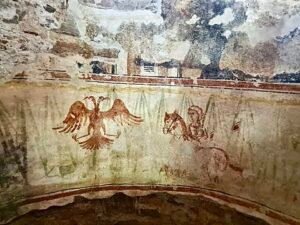
It is said that on the peak of Tomorr, where the clouds pause to breathe, there dwells Baba Tomorr [Father Tomorr], an ancient elder whose beard is white as the snow that not even the August sun can melt. No need for him to speak. No need for him to be seen. It suffices that he sees. And when he sees, his gaze pierces through time. Four vast-winged and sharp-eyed black eagles circle around him. They are his eyes and ears. When they glide silently, the world is at peace. Yet when they begin encircling the summit in eerie stillness, it is as if one can hear the bells of a coming curse and something grave stirring — an injustice, a broken besa, an offense against the sacred.
Baba Tomorr does not speak with words, but with storms that descend as punishment — with winds that roar through darkness, stones that break loose from the cliffs like the tears of an ancient wrath. He does not strike at once, but he never forgets.
Once, a wealthy and arrogant bey decided to build a tower atop the summit of Tomorr. He wished to rule “from above,” to see every village, every man, every beast beneath him — to rise higher than the mountain’s shadow, to carve his own name there where only God should tread. For a while, all seemed to go well. He had brought master builders, white stones and caravans climbing each day up the slopes.
But the spirit of the mountain did not approve of the undertaking. One night, the winds rose from all four directions. A black storm swallowed everything. Mist fell like a white shroud over the half-built tower.
By morning, the tower was gone — and so was the path that led there. No one could find the way again, though they had labored there for weeks. No trace remained from human deeds thereabouts. Then, it is said, Baba Tomorr finally spoke — his words still echoing through the ages: “No one shall raise a tower above my shadow.”
Since that day, none has dared ascend the sacred peak with pride. All will climb but with reverence, no arrogance. This is not merely the tale of a foolish man but so also a reminder that boundless pride, injustice and contempt for the sacred never go unpunished.
It is said that on the peak of Tomorr, where the clouds pause to breathe, there dwells Baba Tomorr [Father Tomorr], an ancient elder whose beard is white as the snow that not even the August sun can melt. No need for him to speak. No need for him to be seen. It suffices that he sees. And when he sees, his gaze pierces through time. Four vast-winged and sharp-eyed black eagles circle around him. They are his eyes and ears. When they glide silently, the world is at peace. Yet when they begin encircling the summit in eerie stillness, it is as if one can hear the bells of a coming curse and something grave stirring — an injustice, a broken besa, an offense against the sacred.
Baba Tomorr does not speak with words, but with storms that descend as punishment — with winds that roar through darkness, stones that break loose from the cliffs like the tears of an ancient wrath. He does not strike at once, but he never forgets.
Once, a wealthy and arrogant bey decided to build a tower atop the summit of Tomorr. He wished to rule “from above,” to see every village, every man, every beast beneath him — to rise higher than the mountain’s shadow, to carve his own name there where only God should tread. For a while, all seemed to go well. He had brought master builders, white stones and caravans climbing each day up the slopes.
But the spirit of the mountain did not approve of the undertaking. One night, the winds rose from all four directions. A black storm swallowed everything. Mist fell like a white shroud over the half-built tower.
By morning, the tower was gone — and so was the path that led there. No one could find the way again, though they had labored there for weeks. No trace remained from human deeds thereabouts. Then, it is said, Baba Tomorr finally spoke — his words still echoing through the ages: “No one shall raise a tower above my shadow.”
Since that day, none has dared ascend the sacred peak with pride. All will climb but with reverence, no arrogance. This is not merely the tale of a foolish man but so also a reminder that boundless pride, injustice and contempt for the sacred never go unpunished.
There is no audio content available. Add an audio URL in the admin panel.
There is no video content available. Add a video URL in the admin panel.
Historical period:
Identified as a sacred site since the 4th century BCE
Historical overview of the period
The belief in Mount Tomorr as a sacred place is ancient, with roots traceable to the 4th century BCE, when nature cults and mountain worship were widespread in Illyrian and pre-Roman lands of present-day Albania. This sacrality of the natural — the perception of mountain peaks as the dwelling of divine forces — endured across generations by way of adapting to successive belief systems. During early Christianity, such reverence merged into local devotional practices, whilst under Ottoman rule, through the spread of Bektashism, it became a site of institutionalized spiritual cult. In folk tradition, Tomorr was envisioned as the abode of a supernatural guardian who punished injustice and upheld moral order — embodied in the mythical figure of Baba Tomorr, the white-bearded patriarch surrounded by four eagles. This image, inherited from ancient cosmologies, symbolized the continuity of the mountain’s holiness within collective memory.
With the rise of Bektashism in the 18th–19th centuries, this mythical sensibility crystallized around the cult of Baba Ali (Abaz Ali), one of the principal saints of the Bektashi order. The Teqe of Kulmak on Tomorr’s slopes became one of the most important Bektashi pilgrimage sites in the Balkans. The blending of the popular myth of Baba Tomorr with the religious cult of Baba Ali stands as a rare example of coexistence between myth and institutionalized faith playing into the preservation of the mountain’s sacrality as part of Albania’s spiritual identity.
Conditions that gave rise to the event
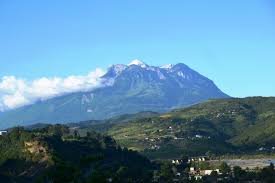
Tomorr is not just a mountain — it is a presence. Seen from afar, its lion-like silhouette sunken in the lofty clouds explains why, for millennia, people have projected the belief that a divine power dwells thereby. No sacred book was needed to consecrate it. Its very wild, serene and imposing nature inspired awe, respect and humility.
As in many ancient cultures, mountain summits in Albania were regarded as holy spaces. Yet Tomorr stood apart: it was not merely a seat of gods, but also a silent judge. People endowed it with a soul — protector of justice, guardian of besa and watcher of human deeds. When tempests struck, the wind lashed the valleys and stones tumbled without apparent cause, these happenings were not seen as accidents but as signs of divine retribution.
From this sensibility arose the figure of Baba Tomorr as the ancient white-bearded man encircled by four eagles. Over time, his image intertwined with Bektashi mysticism, merging into the veneration of Baba Ali. Yet at its heart of this sensibility lies the profoundly human belief that justice has a dwelling place and that the mountain is precisely that place.
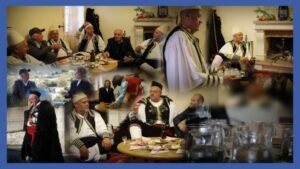
To-the-day Mount Tomorr remains a major pilgrimage site, especially during the Feast of Baba Ali (20–25 August), when hundreds of families ascend its slopes to offer sacrifices, seek forgiveness, give thanks and renew their bond with the sacred.
Message
Today, Mount Tomorr is not only a spiritual symbol but also a center of cultural and identity unity for Albanians. The rituals held every August are a living testimony to interfaith harmony and the heritage of a shared experience that has survived invasions, ideologies, and divisions. Baba Tomorr has become a figure that transcends religious or regional affiliations — a symbol of sacred land, justice, and an unfading memory.
For the Bektashi community, the site remains one of the most important centers of spiritual pilgrimage, dedicated to Baba Ali. For many others, it is a mountain that speaks through history, legends, and silence. In an increasingly fragmented world, where holiness risks being lost to self-interest, Tomorr remains a point of orientation and a mirror of who we have been and who we still aspire to be.
Meaning in Today’s Context
Today, Mount Tomorr is not only a spiritual symbol but also a center of cultural and identity unity for Albanians. The rituals held every August are a living testimony to interfaith harmony and the heritage of a shared experience that has survived invasions, ideologies, and divisions. Baba Tomorr has become a figure that transcends religious or regional affiliations — a symbol of sacred land, justice, and an unfading memory.
For the Bektashi community, the site remains one of the most important centers of spiritual pilgrimage, dedicated to Baba Ali. For many others, it is a mountain that speaks through history, legends, and silence. In an increasingly fragmented world, where holiness risks being lost to self-interest, Tomorr remains a point of orientation and a mirror of who we have been and who we still aspire to be.
Bibliography
- Elsie, Robert. Albanian Folktales and Legends. Dukagjini Publishing House, Pejë, 2001.
- Mandala, Pëllumb. Kulti i Tomorrit: Ndërmjet Mitit dhe Besimit Popullor [The cult of Tomorr: Between Myth and Popular Belief]. Akademia e Shkencave e Shqipërisë, Tiranë, 2009.
- Doja, Albert. “Politics of Religious Dualism: Bektashism in Albania.” Critique of Anthropology, vol. 20, no. 1, 2000, pp. 61–86.
- Institute of Popular Culture. Kultura Popullore [Popular Culture], Nr. 2, 1981; Nr. 1, 1987.