Event
One afternoon in springtime, a word misunderstood – between two young men, distant cousins from different clans – ended in tragedy. One of them, Gjeto, shot the other during a quarrel over grazing boundaries. It was not a premeditated act, yet according to the Kanun, it struck the opening of a blood feud. From that moment, Gjeto could no longer return home. The victim’s clan was known for its honor and discipline, but also for its severity
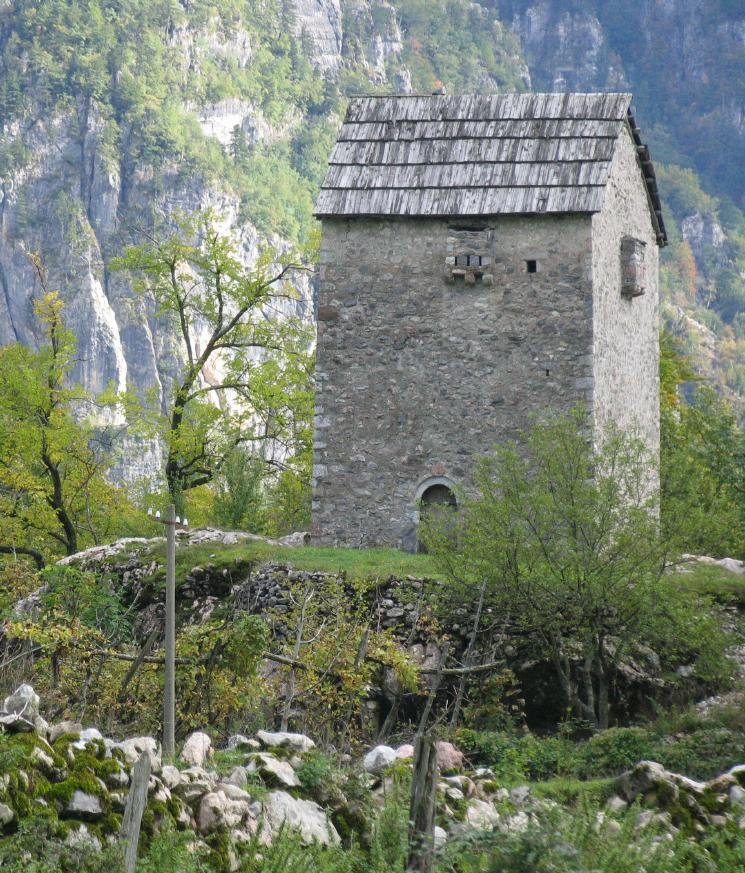
Within hours, the elders of both families would gather in council to set the first terms of besa — the temporary truce that prevented immediate revenge. According to custom, it was decided that Gjeto should surrender unarmed and go to the Tower of Confinement (Kulla e Ngujimit), where one who had “opened blood” was held. Escorted by loyal young men from his clan, Gjeto entered the tower with bowed head and without a word, as tradition demanded. From that moment on, he was confined. He could not step outside, take part in village life, work the land, or attend weddings and funerals. Only women were allowed to move freely nearby outside the kulla, fetching him bread and water. Confinement
Confinement could last for months or even years, though in practice the stay inside the tower rarely exceeded 10–15 days, long enough for the elders to reach a decision. Once judgment was given, the accused had but three-days time to take leave from thereabouts.
Gjeto awaited in silence. Each day felt like a lifetime, for life in confinement was like a single day that never ended. Meanwhile, the elders continued their investigation — had it been murder or self-defense? Every detail mattered for the final verdict. When it was finally determined that the killing had been unintentional — the result of a trivial dispute — the elders initiated a process of reconciliation. Visits to the victim’s family were frequent. At first, words were not well received, but time, sorrow and the mediation of respected men softened the pain. One morning, the victim’s family agreed to come to the tower for a final encounter.
In the middle of the oda, as tradition dictated, a cradle was placed — with a baby tied face down, a symbol of innocence and of life endangered by conflict of adults. The child could have been Gjeto’s or perhaps a nephew of his. No one could look at a child in that state without feeling shaken
The elders turned to the patriarch of the victim’s clan and asked: “Will you forgive this newborn — or let the child die?” It was the moment of truth in the heart of a man, when honor and humanity stood face to face. After a tense silence, the old man rose and turned the cradle upright. That gesture alone meant that the blood was forgiven. To seal the act, a ritual of reconciliation followed… sometimes the elder would cut a lock of the child’s hair, becoming his godfather… sometimes, the two men would drink from the same cup bearing wine mixed with drops of blood, in a ritual known as the “Brotherhood of the Finger.”
From that day, Gjeto could leave the tower. Life would never be the same, but he was no longer a prisoner, no longer hunted. The wound was closed and coexistence had been preserved in a community whose people quarreled and cared for one another sharing the same mountain, the same fields and often the same bloodline.
The Kanun did not promote revenge — it sought to regulate it within the boundaries of honor and truce (besa). It left no space for blind vengeance or endless bloodshed. Killing required a response, but that response had to weighted through wisdom, leaving open the path toward forgiveness. The Kanun offered a form of communal justice in the absence of the state, and for centuries it was the only system guaranteeing order and stability in the remote northern highlands.
In this context, the Tower of Confinement was not a symbol of fear, but of traditional law. The elders served as judges, the guards as police, and the tower itself was both court and prison. In the absence of modern institutions, this system functioned with authority and moral weight — and was respected by all.
Within hours, the elders of both families would gather in council to set the first terms of besa — the temporary truce that prevented immediate revenge. According to custom, it was decided that Gjeto should surrender unarmed and go to the Tower of Confinement (Kulla e Ngujimit), where one who had “opened blood” was held. Escorted by loyal young men from his clan, Gjeto entered the tower with bowed head and without a word, as tradition demanded. From that moment on, he was confined. He could not step outside, take part in village life, work the land, or attend weddings and funerals. Only women were allowed to move freely nearby outside the kulla, fetching him bread and water. Confinement
Confinement could last for months or even years, though in practice the stay inside the tower rarely exceeded 10–15 days, long enough for the elders to reach a decision. Once judgment was given, the accused had but three-days time to take leave from thereabouts.
Gjeto awaited in silence. Each day felt like a lifetime, for life in confinement was like a single day that never ended. Meanwhile, the elders continued their investigation — had it been murder or self-defense? Every detail mattered for the final verdict. When it was finally determined that the killing had been unintentional — the result of a trivial dispute — the elders initiated a process of reconciliation. Visits to the victim’s family were frequent. At first, words were not well received, but time, sorrow and the mediation of respected men softened the pain. One morning, the victim’s family agreed to come to the tower for a final encounter.
In the middle of the oda, as tradition dictated, a cradle was placed — with a baby tied face down, a symbol of innocence and of life endangered by conflict of adults. The child could have been Gjeto’s or perhaps a nephew of his. No one could look at a child in that state without feeling shaken
The elders turned to the patriarch of the victim’s clan and asked: “Will you forgive this newborn — or let the child die?” It was the moment of truth in the heart of a man, when honor and humanity stood face to face. After a tense silence, the old man rose and turned the cradle upright. That gesture alone meant that the blood was forgiven. To seal the act, a ritual of reconciliation followed… sometimes the elder would cut a lock of the child’s hair, becoming his godfather… sometimes, the two men would drink from the same cup bearing wine mixed with drops of blood, in a ritual known as the “Brotherhood of the Finger.”
From that day, Gjeto could leave the tower. Life would never be the same, but he was no longer a prisoner, no longer hunted. The wound was closed and coexistence had been preserved in a community whose people quarreled and cared for one another sharing the same mountain, the same fields and often the same bloodline.
The Kanun did not promote revenge — it sought to regulate it within the boundaries of honor and truce (besa). It left no space for blind vengeance or endless bloodshed. Killing required a response, but that response had to weighted through wisdom, leaving open the path toward forgiveness. The Kanun offered a form of communal justice in the absence of the state, and for centuries it was the only system guaranteeing order and stability in the remote northern highlands.
In this context, the Tower of Confinement was not a symbol of fear, but of traditional law. The elders served as judges, the guards as police, and the tower itself was both court and prison. In the absence of modern institutions, this system functioned with authority and moral weight — and was respected by all.
There is no audio content available. Add an audio URL in the admin panel.
There is no video content available. Add a video URL in the admin panel.
Historical period:
15th–20th centuries
Historical overview of the period
In northern Albania, for centuries, order was not guaranteed by the state, but by an unwritten legal code transmitted across generations — the Kanun of Lekë Dukagjini. Later compiled by Father Shtjefën Gjeçovi, the Kanun was more than a set of laws: it was a way of life, a comprehensive system of traditional justice that governed every aspect of existence in the highlands, spanning from family relations and property division to the punishment of serious crimes. Within this framework, the Tower of Confinement held a central function. It was not a refuge for the guilty, but a space where time stood still, whilst justice was sought not through violence but through patience, silence and endurance. The tower served as a form of traditional pre-trial custody for the perpetrator of a killing or for members of his family, thereby preventing retaliation until the elders could deliberate and pronounce judgment.
Conditions that gave rise to the event
In a society where blood feuds were part of the code of honor (meticulously regulated by the Kanun) confinement provided a way to suspend vengeance and open space for mediation. After a killing, respected elders were called to investigate the circumstances and determine whether the blood was “just” or had been shed unjustly, in which case reconciliation had to be sought. The offender would surrender unarmed and be escorted to the tower, guarded by trusted young men. His stay there, in silence and isolation, was a sign of accepting responsibility and readiness to face justice according to the Kanun.
Message
The Tower of Confinement embodies a form of traditional Albanian justice built on restraint, accountability and respect for communal norms. It was not a site of revenge, but a space to halt violence. It did not glorify bloodshed, but sought to contain it through law, dialogue and honor code. Today, as modern legal institutions are firmly established and blood feuds are rejected as remnants of the past, the tower remains a monument of historical and moral memory. It speaks to younger generations of a time when justice was pursued with honesty, but often at the cost of years of solitude and silent atonement. Visiting a tower such as the one in Theth is a journey back to a world where a man’s word carried weight and honor was valued above life itself.
Meaning in Today’s Context
Today, when the state legal system is consolidated and blood feuds are rejected as a practice, the tower remains a monument of historical and spiritual memory. It speaks to younger generations of a time when justice was sought honestly, but at a high personal cost — with years of waiting, solitude, and punishment. Visiting such a tower, like the one in Theth, is a return to a world where a word carried weight and honor was valued above life itself.
Bibliography
- Gjeçovi, Shtjefën. Kanuni i Lekë Dukagjinit [The Kanun of Lekë Dukagjini]. Tiranë: Shtëpia Botuese “Kuvendi”, 2001.
- Durham, Edith. High Albania and Other Writings on the Balkans. Tiranë: Shtëpia Botuese “8 Nëntori”, 1990.
- Reports and field notes on the Tower of Confinement in Theth.