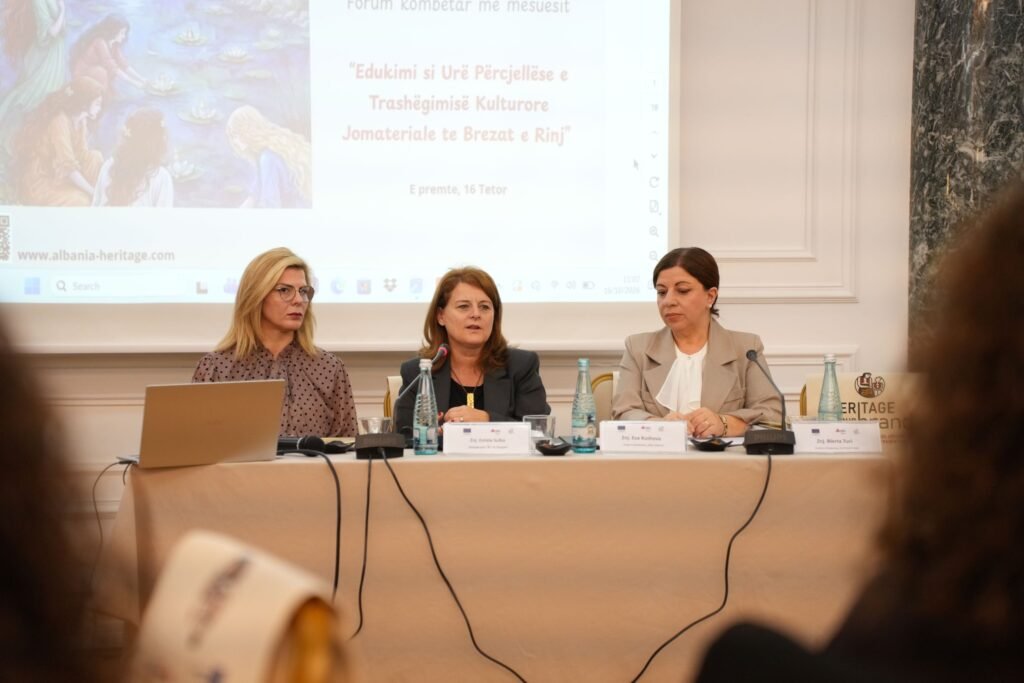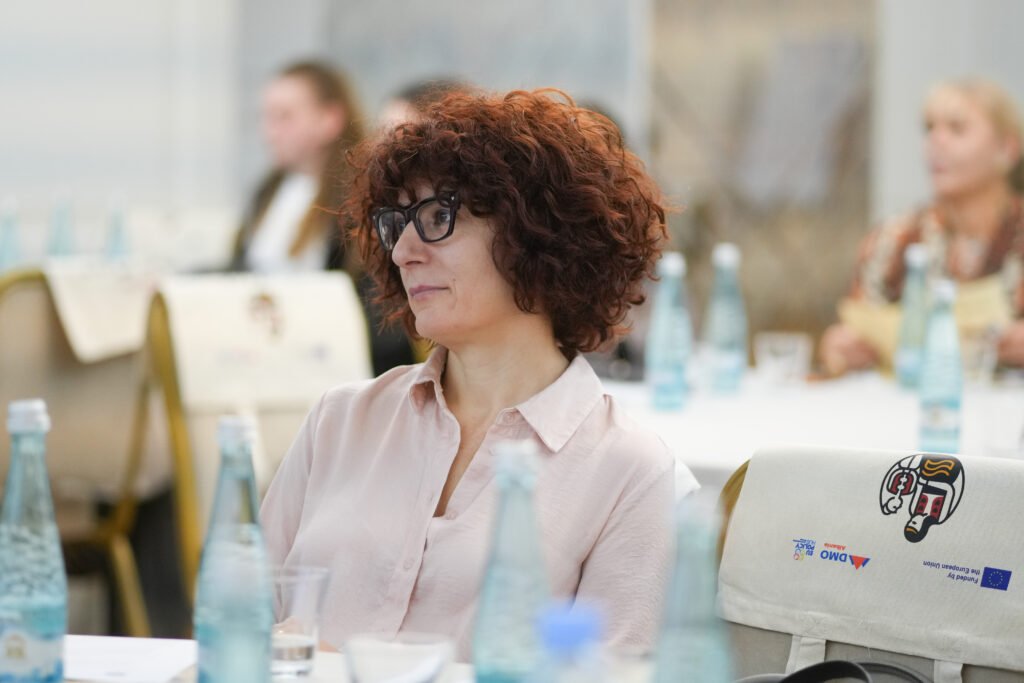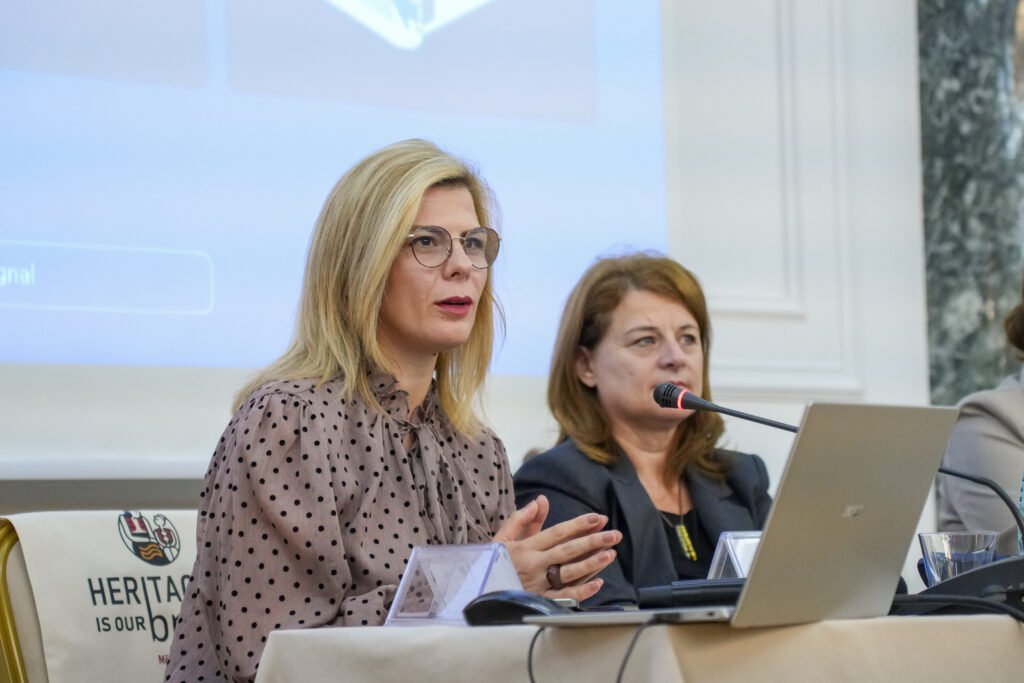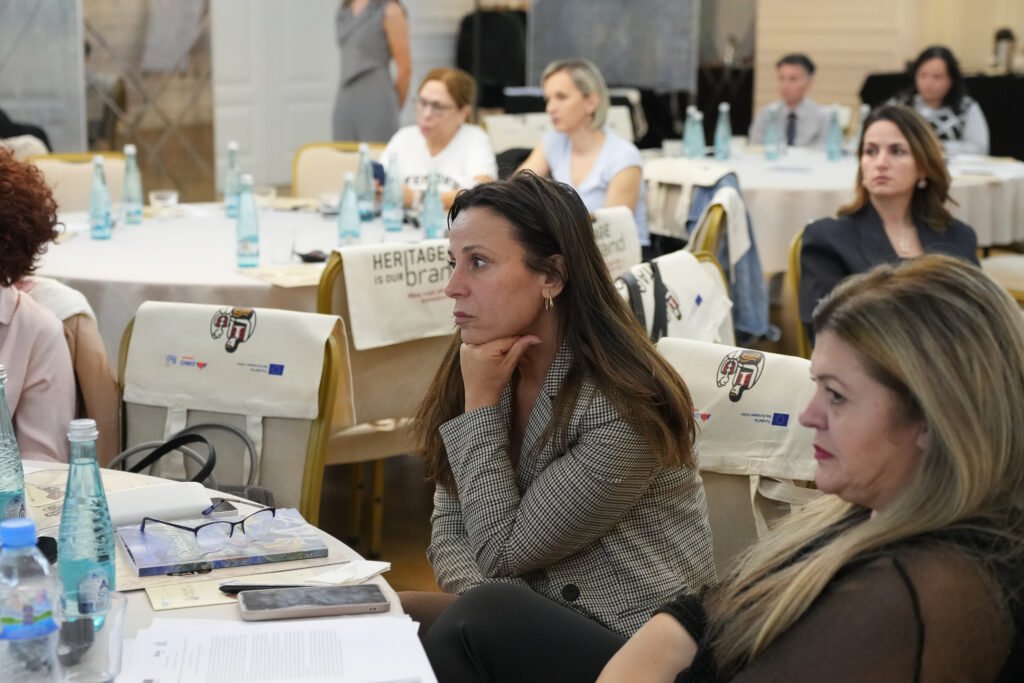
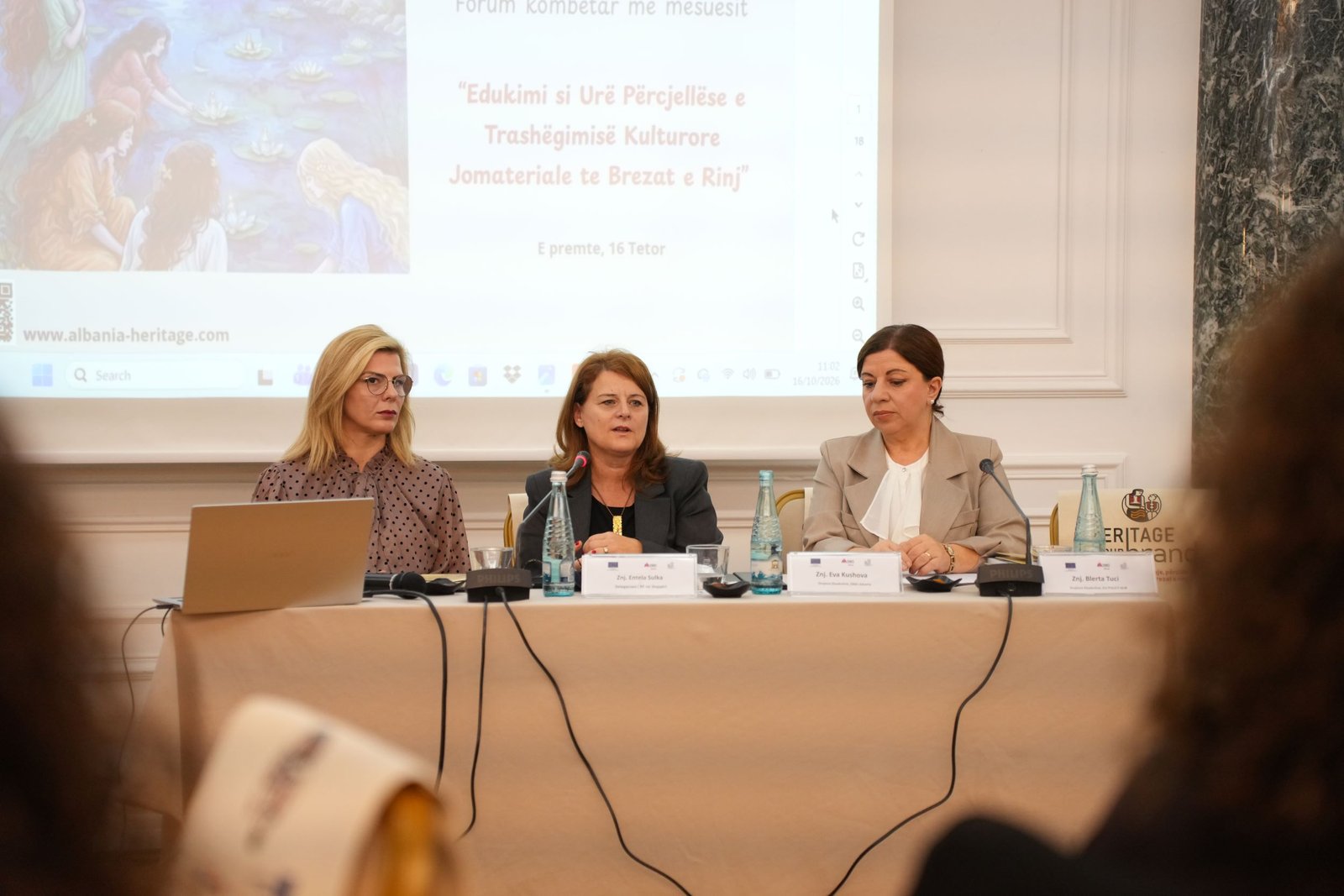
More than 50 primary and secondary school teachers from across Albania, heritage experts, university lecturers, and other stakeholders took part in the National Forum entitled “Education as a Bridge for Passing Intangible Cultural Heritage on to Younger Generations”, organised as part of the “Heritage is Our Brand” project, funded by the European Union and implemented by DMO Albania in partnership with EU Policy Hub
The forum highlighted education's role in safeguarding and passing on Albania’s intangible cultural heritage to younger generations.
Moderated by university lecturer Irena Myzeqari, the event opened with remarks by Entela Sulka, representative of the European Union Delegation, who emphasised the importance of teachers in transmitting intangible cultural heritage.
“This is an important event for cultural heritage. A fairy tale, a folk song, or products handmade by skilled artisans can leave us with beautiful memories that we want to pass on to the next generation. But for this to be possible, the first gateway is the school, and teachers are the first point of contact,” she stated.
Eva Kushova, Executive Director of DMO Albania, presented the educational platform dedicated to intangible cultural heritage, outlining the project's objectives and main results. She introduced the work carried out through the project, which aims to pass Albania's cultural heritage on to younger generations. She also encouraged participants to explore the heritage stories available on the Albania Heritage platform and use them in classroom lessons and extracurricular activities.
Esmeralda Agolli, a university lecturer specialising in cultural heritage, highlighted the importance of teachers' participation in the forum and their role in transmitting cultural heritage. She also drew attention to a fundamental challenge concerning the transmission of heritage to younger generations.
Anila Mullahi, a recipient of the project's grants and a lecturer in Literature at the Faculty of Philology, where future teachers are trained, presented the project's latest publication, Kujtesa e dheut (Memory of the Land). The book features illustrative graphics and 20 legends accompanied by educational questions and learning activities.She explained how stories such as Teuta, Queen of the Seas; King Genti and the Flower of Miracles; The Story of the Tower of Confinement; The Myth of Cadmus; The Dragon and the Kulshedra; and Father Tomorr, among others, represent valuable elements of Albania's cultural heritage that should be passed on to younger generations.
In the second part of the forum, Blerta Tuci, the project coordinator and head of the partner organisation EU Policy Hub, presented the main findings of a study on young people and intangible cultural heritage. The survey provided an overview of younger generations' knowledge of intangible cultural heritage and identified a series of recommendations on how traditions, customs, and cultural identity can be transmitted to younger generations.
Ergys Gezda, representative of the Lybernic organisation, raised concerns about the need to develop educational policies that respond to contemporary challenges and the needs of younger generations, while also encouraging debate and critical thinking.
“We need to contextualise knowledge; this is where one of today's greatest challenges lies. Young people ask: ‘What connects me to this heritage?’ They are not indifferent; they are tired. Why shouldn't cultural heritage be open to debate? Why shouldn't we discuss with students which traditions deserve to be preserved? Safeguarding heritage does not mean accepting everything that comes from the past without reflection. Schools should not simply be places where young people learn what they have inherited; they should also be places where they discover what they can do with that heritage.”
Teachers exchanged views on integrating intangible cultural heritage into schools. Some highlighted that it had already been incorporated into extracurricular programmes in certain schools through initiatives such as the revival of traditional craft clubs. Discussions focused on the importance of integrating intangible cultural heritage into the education system and recognising it as a powerful tool for strengthening cultural identity, fostering creativity, and increasing the engagement of younger generations. Participants also emphasised the potential of digital tools to make teaching more interactive and inclusive.
Teachers were also provided with materials developed through the “Heritage is Our Brand” project, including resources available on the Albania Heritage platform (albaniaheritage.com), which can serve as sources of inspiration and educational resources for classroom activities.
Participants were further informed about the launch of a national competition for students from schools across Albania. Through this initiative, children will have the opportunity to present creative works inspired by stories and elements of intangible cultural heritage, encouraging them to explore, interpret, and engage with Albania's rich cultural traditions.