Event
Bedri was a poor young man from Kruja, who through courage had risen the ranks of the Ottoman army. When the army was downsized, he returned to his hometown uncertain about his future. One day, near a forest spring, a beautiful fairy (zana) appeared to him, giving this cryptic warning: “Beware of the beam and the doe. By the spring, you are safer than by the root.”
Sometime later, as Bedri rested near that same spring, a group of horsemen escorting a veiled young woman stopped there. A single glance between him and the girl — whose name, he later learned, was Drenusha (meaning “the doe”) — was enough to ignite in him an uncontainable and fateful love.
The riders continued toward Tirana, and Bedri, following his heart, went after them. In Tirana, he became unintentionally involved in a local conflict and narrowly escaped death thanks to his former military rank. While recovering in a local household, he discovered that the girl he had seen, Drenusha, was being married against her will to the governor of Tirana.
When she saw Bedri again, she confessed her love and begged him to rescue her from the forced marriage. Defying all perils, Bedri took a horse and freed the girl from her imprisonment, breaking the wooden window beam (the “trau”) foretold by the fairy. They fled together on a white horse into the night. When the governor discovered their escape, he sent his men in pursuit. Instead of riding toward Kruja (“the spring”), Bedri chose the road toward Ndroq (“the root”) in oblivion of the fairy’s warning. Along the way, he realized the meaning of her prophecy, but alas it was too late. The pursuers caught up with them near Ndroq. Seeing no way to escape and refusing to surrender the woman he loved and handing her to dishonor, Bedri made his tragic choice. He took Drenusha’s life and then his own. Their final breath was a prayer — to be buried together.
Sometime later, as Bedri rested near that same spring, a group of horsemen escorting a veiled young woman stopped there. A single glance between him and the girl — whose name, he later learned, was Drenusha (meaning “the doe”) — was enough to ignite in him an uncontainable and fateful love.
The riders continued toward Tirana, and Bedri, following his heart, went after them. In Tirana, he became unintentionally involved in a local conflict and narrowly escaped death thanks to his former military rank. While recovering in a local household, he discovered that the girl he had seen, Drenusha, was being married against her will to the governor of Tirana.
When she saw Bedri again, she confessed her love and begged him to rescue her from the forced marriage. Defying all perils, Bedri took a horse and freed the girl from her imprisonment, breaking the wooden window beam (the “trau”) foretold by the fairy. They fled together on a white horse into the night. When the governor discovered their escape, he sent his men in pursuit. Instead of riding toward Kruja (“the spring”), Bedri chose the road toward Ndroq (“the root”) in oblivion of the fairy’s warning. Along the way, he realized the meaning of her prophecy, but alas it was too late. The pursuers caught up with them near Ndroq. Seeing no way to escape and refusing to surrender the woman he loved and handing her to dishonor, Bedri made his tragic choice. He took Drenusha’s life and then his own. Their final breath was a prayer — to be buried together.
There is no audio content available. Add an audio URL in the admin panel.
There is no video content available. Add a video URL in the admin panel.
Historical period:
18th–19th centuries, with older roots in the oral tradition of Central Albania.
Historical overview of the period
In the patriarchal setting of Albanian society, where besa (the pledged word), honor and family were the pillars of life, free love was often a distant dream — and a dangerous one. Marriages were arranged to secure alliances and safeguard property, relegating personal feelings secondary to family duty. Constant feuds between clans and cities deepened the impossibility of a pure and self-chosen love.
Conditions that gave rise to the event
These conflicts and obligations made love itself an act of rebellion. Thus, tales of true love survived as legends, transmitted orally from generation to generation, transforming personal tragedy into a symbol of devotion and idealism.
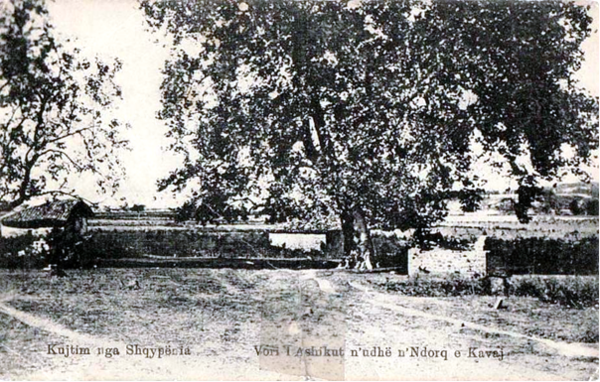
The existence of the Lover’s Grave (Varri i Ashikut) in Ndroq was documented in the 19th century by Johan Georg von Hahn and Spiridon Gopčević. Robert Elsie, in his retelling, presents the story of the two lovers as a classic example of the romantic ideal of the epoch. Another folk version recounts of two lovers named Bukuria and Faqebardhi, separated by social barriers and customary tradition, who were buried together in the place that still bears the name Varri i Ashikut.
Message
The Lover’s Grave stands as a symbolic monument to love that defies all obstacles. It stands as an eternal reminder of the moving power and tragedy tied to pure affection, showing that love can transcend even death.
This site remains a poignant cultural landmark, a symbol that reminds us how true love, though often at odds with social conventions, continues to live on in a people’s collective memory. By preserving and valuing this legend, we also safeguard its timeless message — that love, in its purest form, is both sacrifice and immortality.
Meaning in Today’s Context
This place is an important cultural testimony, a symbol that reminds us that true love, even when it defies social norms, continues to live on in the legends and memory of a people. By preserving and valuing this story, we also safeguard the powerful message it carries for today’s society.
Bibliography
- Elsie, Robert. Albanian Folktales and Legends. I.B. Tauris, 2001.
- Gopčević, Spiridon. Oberalbanien und seine Liga. Leipzig, 1881
- Frashëri, Kristo. Historia e Tiranës [History of Tirana]. Tiranë: Toena, 2002.
- www.elsie.de