Event
Tana, the only daughter of a wealthy farmer, had fallen in love with a poor shepherd — her family’s hired hand. When word reached her father’s ears, he refused to believe it. To test his daughter, he asked her to bring bread to the shepherd and secretly followed her.
The young man, seeing from afar that his beloved was being watched, took his flute and began to play, singing softly:
“Tana, my fair Tana!
Hang the bread upon the hawthorn tree,
For your father is near.”
It was a call for silence, a plea to hide their love. The girl understood and called out from a distance: “O shepherd of the mountain! Come, take your bread by the hawthorn tree!”
These words convinced her father that she did not love the shepherd.
Some time later, a band of thieves surprised the shepherd at his sheepfold and bound him near the pasture. He pleaded with them to have at least one of his hands freed so he could play his flute. Amused, they agreed and went on their way.
Soon, the sounds of the flute and song spread across the hills. Tana heard it too. The shepherd sang:
“Tana, my poor Tana!
Wake your father, let him gather the men,
For they have bound the shepherd,
The sheep are near the elder trees,
The black dog is slain,
Two rams taken to the spit —
Wake your father, let him raise the alarm!”
Hearing this, Tana ran to her father and cried:
“Rise, father, call the men!
The shepherd is bound,
The sheep are near the elder trees!”
Her father and the village men rushed to the scene and freed the shepherd. The old man then turned to the youth:
— “Do you love my daughter?”
— “More than life itself,” the shepherd replied.
— “Then may you be bound together for life,” said the father, tying their hands with a white handkerchief.
By joining their hands, the daughter’s father sealed their union. With one of his hands bound, the shepherd could no longer play his flute — nor did he need to, for love had been granted. The flute had fulfilled its purpose. An instrument no longer giving sound to longing, thereby becoming a symbol of sacrifice that made love possible and saved life.
“Tana, my fair Tana!
Hang the bread upon the hawthorn tree,
For your father is near.”
It was a call for silence, a plea to hide their love. The girl understood and called out from a distance: “O shepherd of the mountain! Come, take your bread by the hawthorn tree!”
These words convinced her father that she did not love the shepherd.
Some time later, a band of thieves surprised the shepherd at his sheepfold and bound him near the pasture. He pleaded with them to have at least one of his hands freed so he could play his flute. Amused, they agreed and went on their way.
Soon, the sounds of the flute and song spread across the hills. Tana heard it too. The shepherd sang:
“Tana, my poor Tana!
Wake your father, let him gather the men,
For they have bound the shepherd,
The sheep are near the elder trees,
The black dog is slain,
Two rams taken to the spit —
Wake your father, let him raise the alarm!”
Hearing this, Tana ran to her father and cried:
“Rise, father, call the men!
The shepherd is bound,
The sheep are near the elder trees!”
Her father and the village men rushed to the scene and freed the shepherd. The old man then turned to the youth:
— “Do you love my daughter?”
— “More than life itself,” the shepherd replied.
— “Then may you be bound together for life,” said the father, tying their hands with a white handkerchief.
By joining their hands, the daughter’s father sealed their union. With one of his hands bound, the shepherd could no longer play his flute — nor did he need to, for love had been granted. The flute had fulfilled its purpose. An instrument no longer giving sound to longing, thereby becoming a symbol of sacrifice that made love possible and saved life.
There is no audio content available. Add an audio URL in the admin panel.
There is no video content available. Add a video URL in the admin panel.
Historical period:
An oral and instrumental heritage surviving from antiquity to the present (undated); the story of Tana dates to the 19th century.
Historical overview of the period
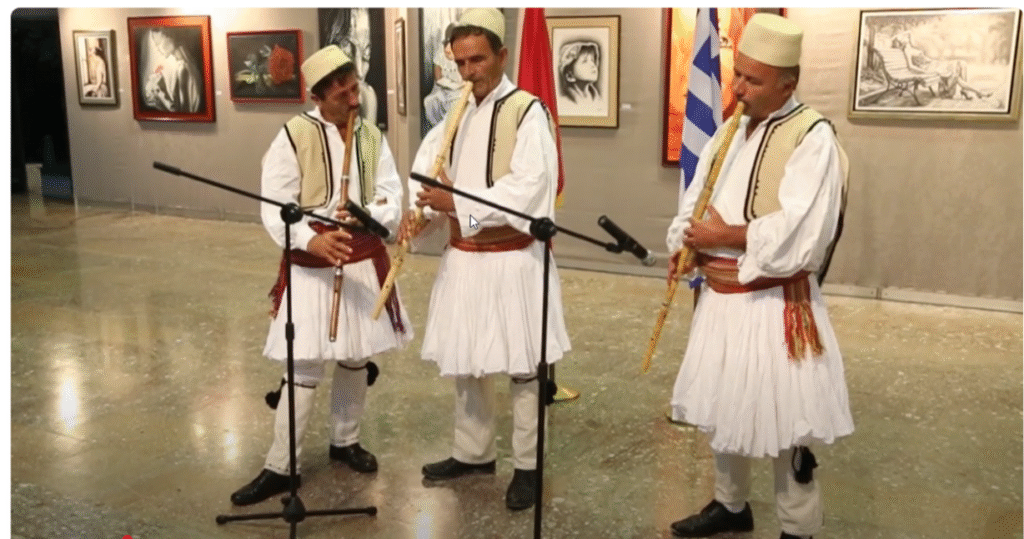
The region of Gramsh preserves one of the rarest and most authentic expressions of Albanian folk heritage — the flute (fyell) as instrument, craftsmanship, language of communication and spiritual symbol. In this mountainous landscape, where daily life was bound to shepherding, nature and the rhythms of community life, the flute was not just an instrument but the very voice of human emotions — as distant calls and echo of joy, pain, love and longing.
In the 19th century’s society featuring sharp divides by wealth and status, love often collided with kin honor – and the flute, as a silent messenger, remained as the one voice that could speak when speech was forbidden. The Legend of Tana and the Shepherd took root in this setting, a tale elevating the flute as a medium enabling an act of redeeming and a symbol of fidelity.
Conditions that gave rise to the event
In a world where class-based social boundaries were strict and the rich man’s daughter could not love the poor shepherd, the flute became an invisible bridge between two hearts. In the shepherd’s hands, it was not just a musical tool but the voice of solitude, the witness of thought and emotion, and the companion of the soul on the mountainside. In the highlands of Gramsh — where man and nature are one — the flute linked the shepherds to the world as to the self. It gave sound to the stillness of pastures, gathered the scattered flocks, whispered hidden loves and unspoken sorrows. The shepherd played not to be heard, but to communicate with the unseen — with love, with hope, with the spirit of the land that answered him through the wind. Through this silent yet profound bond, the flute became the shepherd’s second identity — an extension of his breath, still echoing across the valleys of Gramsh. Yet it also had practical uses: it could warn of danger, signal across hills or carry messages between shepherds.
Gramsh still preserves rare craftsmanship in flute-making, along with a rich pastoral repertoire of melodies that roll through its deep valleys. It is within this cultural landscape that the story of Tana and “the flute that speaks” was born and passed down through generations.
Message
The flute of Gramsh is not merely an ancient folk instrument. It represents an eternal language — one that speaks of love, faith, unspoken feelings and the soul’s power to transcend words. In Tana’s story, it becomes a voice of rescue, an echo of forbidden love and a testament of loyalty in a society where the free word was often silenced. In daily life, the flute served as a bridge among shepherds, a signal of danger, a song of longing and a call of affection.
But the deeper message of this heritage is that in a society divided by gender, class and lineage, the flute of Gramsh recognized no boundaries. It could belong to anyone wishing to dedicate his breath, infuse his feelings and the cherish the will to speak through sound what could not be said in speech. In the shepherd’s humble hand, the flute gained a sacred force — becoming the voice of truth, the witness of emotion and the affirmation of shared humanity.
The fact that the Flutes of Gramsh have been proclaimed a “National Masterpiece of Albania’s Intangible Cultural Heritage” is not simply an institutional fact, but rather a recognition of this spiritual treasure surviving centuries of silence, living on in the hands of Gramsh’s flute masters and the countless generations giving them the breath of life.
Meaning in Today’s Context
Today, when the pace of life has accelerated and communication has become instant but often empty, the flute of Gramsh emerges as a countervoice — a call to pause, to listen, and to understand more deeply. It preserves, at its core, the sound of the earth, the breath of the shepherds, the spirit of nature, and becomes a symbol of a culture that speaks not through noise, but through feeling.
The fact that the Gramsh flutes have been declared a “National Masterpiece of Intangible Cultural Heritage” is not merely an institutional act — it is the recognition of a spiritual treasure that has endured centuries of neglect, surviving in the hands of Gramsh’s master flute players and countless generations who have breathed life into the instrument.
In a time when many young people feel disconnected from their roots, the story of the flute and of Tana invites them to see heritage not as a relic, but as a living soul that speaks — of love that never surrenders, of truth that never fears, and of a sound that, though simple, touches deeper than any word.
Bibliography
- National Council of Intangible Cultural Heritage. Proclamation of the “Flutes of Gramsh” as a National Masterpiece of Intangible Cultural Heritage. Tirana: Ministry of Culture, 2023.
- Basha, Petrit. Gramshi në 40-vjetorin e deklarimit qytet [Gramsh on the 40th anniversary of its declaration as a city]. Elbasan, 2000.
- Oral traditions and folk songs from the region of Gramsh.