Event
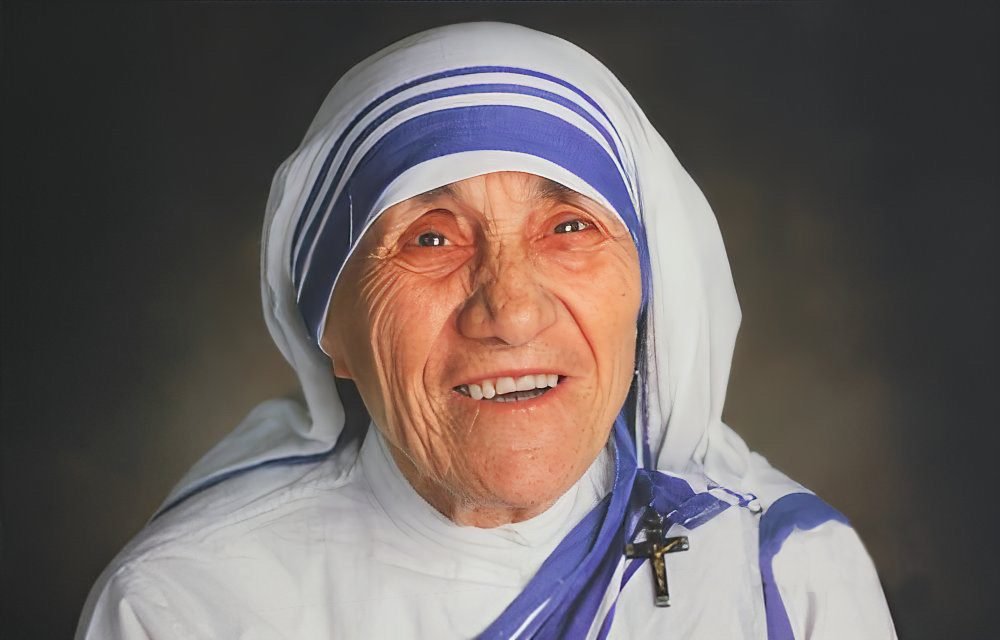
In a world where words often lose their meaning, Mother Teresa spoke through deeds. With her small hands, she washed the wounds of lepers, cradled abandoned children and wiped the brows of the dying. She feared neither filth nor the stench of death, nor the empty gaze of suffering. She went where no one dared to go — into the poorest quarters of Calcutta, among shacks, dusty streets and forgotten souls.
Small in body but immense in spirit, she built a temple of mercy without walls, sustained by the hearts of people. She lived her life in silence — not seeking glory, not making a fuss or gearing up cameras. And when she left this world on September 5, 1997, it was as though a light had gone out. Yet in truth, that light began to shine brighter than ever.
After her death, the Catholic Church initiated the process of her canonization. Though she had never sought after sainthood. For her, every human being possessed dignity and every act of love was worth more than any title. She used to say, “We are not called to be successful, but to be faithful.” And she remained faithful — until the end.
Even so, the miracles that occurred after her passing could not be ignored.
The first happened in India, where she had spent most of her life. A poor woman named Monica Besra suffered from a severe abdominal tumor. She had no money for medicine, no support — only her faith. She prayed to Mother Teresa with a broken heart and, within days, without any medical intervention, the tumor disappeared. Doctors had no explanation, but her family knew all to well who had intervened. To them, she was not a nun but rather a living light.
The second miracle occurred in Brazil. A young man, gravely ill and fallen in a coma, had been declared from doctor’s a patient beyond hope. Doctors told his family to prepare for the end. Yet they refused to give up. They placed a photograph of Mother Teresa beneath his pillow and prayed with all their hearts. Days passed without change until, suddenly, the inexplicable happened: the young man opened his eyes. He was alive. Through him, Mother Theresa profoundly touched the world once more.
On September 4, 2016, under the open sky of the Vatican, Pope Francis proclaimed her a saint, calling her “The Saint of Mercy.” People from around the world — of every faith, complexion and nation — gathered to honor her life. For by then, she no longer belonged only to Catholics, nor only to Albanians or Indians, she belonged to humanity itself. She was the voice of the voiceless, the hope rekindled for those on the verge of losing it.
That day, Albanianhood — as a shared feeling, a memory of blood, and a spiritual heritage — embraced its daughter with quiet pride. Her name was acclaimed in Shkup (Skopje), Tirana, Prishtina, Ulqin, Tetovo, Presheva and among the Arbëresh communities of Italy. In humble Albanian homes, candles were lit. In churches and mosques alike, prayers were raised. And in people’s hearts glowed the conviction that one of their own, a daughter of this land, had risen to heaven as a humane pure light.
She was a figure that had always been loved, always accepted — but that day she became an eternal part of the Albanian spirit. Not because she was famous, but because she was truthful. She never sought power, never desired fame, but humbly gave love to those who had nothing. She was perhaps the only Albanian who succeeded in uniting everyone — Christians, Muslims and atheists alike — around the simplest and strongest value of all: love.
As she herself had put it, better than anyone else before: “If you cannot do great things, do small things with great love.” And it was precisely this love that immortalized her.
Small in body but immense in spirit, she built a temple of mercy without walls, sustained by the hearts of people. She lived her life in silence — not seeking glory, not making a fuss or gearing up cameras. And when she left this world on September 5, 1997, it was as though a light had gone out. Yet in truth, that light began to shine brighter than ever.
After her death, the Catholic Church initiated the process of her canonization. Though she had never sought after sainthood. For her, every human being possessed dignity and every act of love was worth more than any title. She used to say, “We are not called to be successful, but to be faithful.” And she remained faithful — until the end.
Even so, the miracles that occurred after her passing could not be ignored.
The first happened in India, where she had spent most of her life. A poor woman named Monica Besra suffered from a severe abdominal tumor. She had no money for medicine, no support — only her faith. She prayed to Mother Teresa with a broken heart and, within days, without any medical intervention, the tumor disappeared. Doctors had no explanation, but her family knew all to well who had intervened. To them, she was not a nun but rather a living light.
The second miracle occurred in Brazil. A young man, gravely ill and fallen in a coma, had been declared from doctor’s a patient beyond hope. Doctors told his family to prepare for the end. Yet they refused to give up. They placed a photograph of Mother Teresa beneath his pillow and prayed with all their hearts. Days passed without change until, suddenly, the inexplicable happened: the young man opened his eyes. He was alive. Through him, Mother Theresa profoundly touched the world once more.
On September 4, 2016, under the open sky of the Vatican, Pope Francis proclaimed her a saint, calling her “The Saint of Mercy.” People from around the world — of every faith, complexion and nation — gathered to honor her life. For by then, she no longer belonged only to Catholics, nor only to Albanians or Indians, she belonged to humanity itself. She was the voice of the voiceless, the hope rekindled for those on the verge of losing it.
That day, Albanianhood — as a shared feeling, a memory of blood, and a spiritual heritage — embraced its daughter with quiet pride. Her name was acclaimed in Shkup (Skopje), Tirana, Prishtina, Ulqin, Tetovo, Presheva and among the Arbëresh communities of Italy. In humble Albanian homes, candles were lit. In churches and mosques alike, prayers were raised. And in people’s hearts glowed the conviction that one of their own, a daughter of this land, had risen to heaven as a humane pure light.
She was a figure that had always been loved, always accepted — but that day she became an eternal part of the Albanian spirit. Not because she was famous, but because she was truthful. She never sought power, never desired fame, but humbly gave love to those who had nothing. She was perhaps the only Albanian who succeeded in uniting everyone — Christians, Muslims and atheists alike — around the simplest and strongest value of all: love.
As she herself had put it, better than anyone else before: “If you cannot do great things, do small things with great love.” And it was precisely this love that immortalized her.
There is no audio content available. Add an audio URL in the admin panel.
There is no video content available. Add a video URL in the admin panel.
Historical period:
1910–1997, with influence extending beyond her physical life into the present day.
Historical overview of the period
The early 20th century was an age of great upheavals, with empires collapsing and nations being born. The Balkans were aflame with wars. Albania had only just declared independence, while in Albanian-inhabited lands beyond its borders, such as Shkup (Skopje), Albanians faced repression, poverty and marginalization. It was a time when Albanian identity survived more through word, custom and self-sacrifice than through statehood. In this milieu, a small girl named Gonxhe was born into a devoted Albanian Catholic family, a girl who would one day be known to the world as Mother Teresa.
Conditions that gave rise to the event
In a world divided between East and West, between extreme wealth and abject poverty, there emerged a soul that chose not to preach love but to live it. Early 20th-century Shkup was a city of many cultures, marked by political tensions and religious divisions, yet also by a quiet coexistence where Albanians, both Christian and Muslim, shared a common human spirit. The religious upbringing she received at home and within the Jesuit community led Gonxhe toward a vocation that would take her far away from her birthplace, yet never far from her origins.
Message
Në një botë të tejmbushur me fjalë boshe dhe protagonizëm të zbrazët, figura e Nënë Terezës është një sfidë për të gjithë ne. Ajo është një kujtesë se dashuria nuk ka komb, por ka rrënjë. Në një kohë kur identiteti shpesh matet me flamuj e deklarata, ajo e lidhi shqiptarinë me përulësinë, shërbimin dhe sakrificën. Shenjtorja shqiptare na thotë ende sot: “Nëse nuk ke ç’të japësh, jep një buzëqeshje. Dhe mbi të gjitha, të jesh njeri”.
Meaning in Today’s Context
In today’s world, where humanity and empathy have grown scarce — overshadowed by globalization, selfishness, and the thirst for material things — figures like Mother Teresa must be exalted. Such an Albanian figure honors us as a nation and inspires us to support one another and show compassion toward those in need.
The Codices of Berat
This story reminds us that valuable things — especially cultural treasures like the Berat Codices, which reflect our faith and spirituality in a given historical era — must be preserved despite the challenges and wars of time. In doing so, we leave a precious contribution to history for the generations to come.
Bibliography
- Spink, Kathryn. Mother Teresa: A Complete Authorized Biography. HarperOne, 2011.
- Egan, Eileen. Such a Vision of the Street: Mother Teresa – The Spirit and the Work. Doubleday, 1985.
- Doubleday, 1985.
- Congregation for the Causes of Saints. Decree on the Miracle for the Canonization of Mother Teresa. Vatican Press, 2015.
- Kisha Katolike Shqiptare. Nënë Tereza – Shenjtëresha Shqiptare e Dashurisë [Mother Teresa – The Albanian Saint of Love].