Event
According to an oral tradition passed down through generations in the Highlands of Kruja, the event took place in the grim days following the fall of Kruja on 16 June 1478 — a decisive moment for the fate of Albanian lands. When the fortress walls finally collapsed and its gates opened to the Ottoman army, a dark wave of uncertainty and violence swept through the city and its surrounding villages. Those who had defended their homeland for years knew that everything had changed. For young women, this meant facing a fate worse than death: captivity, humiliation, violence and perhaps a life of servitude in the harems of the conquerors.
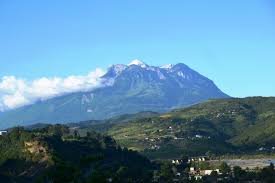
In that terrifying darkness, bereft of hope, ninety young women of Kruja, most of them from families whose sons counted among the ranks of those defending the fortress, made an extraordinary decision. Under the cover of night, they climbed towards a steep, towering cliff on the northern side of the mountain. They wore simple garments, their heads covered with scarves.
They reached the cliff no as victims, but as women resolved to not yield control over their fate — neither giving their bodies to the invader nor bringing dishonor to their families nor shame to the memory of the fallen.
In a silent and solemn gesture, as if performing a ritual long prepared, they threw themselves together into the abyss. Their bodies vanished into the dark chasm, leaving behind only a heavy, sacred silence.
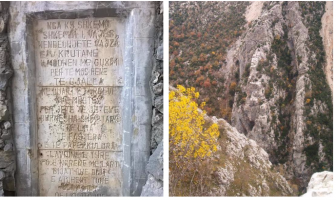
People did not mourn them with cries, but with enduring reverence. The place they named the the Gorge of Lament (Gryka e Vajës), also known as the Maidens’ Cliff. It is said that in that thereabouts even the wind blows more softly and that nature’s resounding carries a solemn tone. On quiet days, locals say that the echo rising from below resembles the voices of a silent choir of maidens.
This extraordinary act remained in collective memory not as a mere tragedy, but as a conscious and collective sacrifice — a rare gesture that transcends time, elevating the Albanian woman to the stature of a silent heroine who fights not with weapons, but with dignity.
In that terrifying darkness, bereft of hope, ninety young women of Kruja, most of them from families whose sons counted among the ranks of those defending the fortress, made an extraordinary decision. Under the cover of night, they climbed towards a steep, towering cliff on the northern side of the mountain. They wore simple garments, their heads covered with scarves.
They reached the cliff no as victims, but as women resolved to not yield control over their fate — neither giving their bodies to the invader nor bringing dishonor to their families nor shame to the memory of the fallen.
In a silent and solemn gesture, as if performing a ritual long prepared, they threw themselves together into the abyss. Their bodies vanished into the dark chasm, leaving behind only a heavy, sacred silence.
People did not mourn them with cries, but with enduring reverence. The place they named the the Gorge of Lament (Gryka e Vajës), also known as the Maidens’ Cliff. It is said that in that thereabouts even the wind blows more softly and that nature’s resounding carries a solemn tone. On quiet days, locals say that the echo rising from below resembles the voices of a silent choir of maidens.
This extraordinary act remained in collective memory not as a mere tragedy, but as a conscious and collective sacrifice — a rare gesture that transcends time, elevating the Albanian woman to the stature of a silent heroine who fights not with weapons, but with dignity.
There is no audio content available. Add an audio URL in the admin panel.
There is no video content available. Add a video URL in the admin panel.
Historical period:
15th century.
Historical overview of the period
The 15th century marks the final efforts of Albanians to preserve independence in the face of the expansion of the Ottoman Empire into the Balkans. After the death of Gjergj Kastrioti Skënderbeu in 1468, the front of resistance weakened and important fortified cities unyielding for decades, such as Kruja, began falling one after the other. On 16 June 1478, after a long and arduous siege, Kruja surrendered. Its fall not only marked the loss of a key bastion of Albanian resistance, but also the beginning of a new chapter of political, economic and cultural subjugation. In this atmosphere of fear and humiliation, many women faced impossible choices: submission or self-sacrifice. It is within this historical context that one of the most powerful legends of collective female sacrifice in Albanian memory was born.
Conditions that gave rise to the event
The Ottoman conquest of Kruja was accompanied by widespread violence against the civilian population, including looting, massacres, burning, and especially the enslavement of women and girls regarded as spoils of war. In a social order where honor and family dignity were closely linked to a woman’s purity, the threat of captivity or violation was seen as an unerasable shame — not only personal but familial. The culture of the time reinforced the woman’s figure as guardian of morality and lineage, and any assault upon her was perceived as the symbolic end of an honorable life. Facing this reality, in order to avoid enslavement, violence or sale in the slave markets, a group of ninety young women from the Highlands of Kruja, most from families that had fiercely fought for the city’s defense, chose self-sacrifice.
Their tragic act was not a mere refusal to fall into physical captivity, but a silent protest against the extinction of national and spiritual freedom, against the subjugation of the body and the violation of womanhood as the bearer of honor, memory and identity. It was a rare form of weaponless resistance, a stand taken through self-offering, preserving the one right the invader could never take – the right to say no to life in bondage.
Message
This story stands as one of the most poignant testimonies of collective female sacrifice in Albanian history. It conveys a powerful message about the preservation of dignity and moral integrity in the face of violence – and it exalts the figure of the Albanian woman as ultimate guardians of freedom and the last frontier of honor when all else is lost. Their act of self-sacrifice was not an act of despair, but one of active resistance to injustice and domination, remembered across generations as a heroic deed.
Today, Gryka e Vajës holds profound potential for historical and cultural tourism, serving as a place of remembrance and reflection, a meeting point for history, emotion and civic awareness.
Meaning in Today’s Context
Today, the Gorge of Wailing is more than just a place shrouded in legend — it is a spiritual monument to women’s resilience, a site of remembrance for courage, honor, and inner strength. The story of the girls from Kruja can be used in educating younger generations to highlight not only the role of women in history but also to address themes of personal freedom, integrity, and gender equality. The Gorge of Wailing also holds great potential for memorial and cultural tourism, turning this site into a meeting point between history, emotion, and civic engagement.
Bibliography
- “Legjenda e Grykës së Vajës ose Shkëmbi i Vashave, çfarë ndodhi 539 vite më parë” [“The Legend of the Gorge of Lament or the Maiden’s Rock – what happened 539 years ago”], BalkanWeb, 19 June 2017.
- “90 vajza krutane u hodhën nga Shkëmbi i Vajës” [“Ninety girls from Kruja threw themselves from the Rock of Lament”] ObserverKult, 4 October 2023.
- Duka, Valentina. Histori e Shqipërisë (nga lashtësia deri në vitin 1912) [History of Albania (from antiquity to the year 1912)]. Tiranë: Kristalina KH, 2007.
- Institute of Popular Culture. Tradition and Oral Heritage. Tiranë: 1996.