Event
Encircled by high mountains along the valley of the Shkumbin (Genusus) where the wind still carries whispers of antiquity, once stood Selca e Poshtme, the heart of the Illyrian tribe of the Desaretes. Thereabouts the mountain slope became a place of pride and a strong and silent people carved into stone the glory of their kings.
The master stone-carver, a humble and taciturn man, worked the rock as though conversing with it. His hands were strong, yet his eyes bore a quiet sorrow transpiring the awareness that all his hands shaped was meant for those who would never speak again…
When the king summoned him and revealed his wish to build an array of royal tombs for himself and for his descendants, the master understood the request was not just for crafting the resting place for the body, but also a dwelling that would speak to eternity. The monument had to address the generations to come: whoever would one day stand before that mountain rock would have to feel the grandeur of a people’s dream.
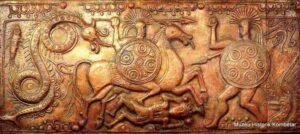
The master worked with devotion for a decade, day and night, upon the living rock. His hammer and chisel told the story: he sculpted the helmets of victorious warriors, the shields of fallen heroes, the swords that had flashed in battle, the laurel leaves that crowned both triumph and mourning, the tears of mothers for sons lost in war and the funeral songs that once stirred the hearts of his people. This way the mountain became home to no mere tomb, but rather a verysome temple of memory, the testimony to a dream.
The craftsman lived long enough to witness the death of the king — a loss that left a profound emptiness in the hearts of his people. It is said that on the night of the king’s burial, as the moonlight touched the cliffs, a gentle glow appeared upon the royal tomb. It was no torch burning in the dark, but something akin to a soft radiance emanating from within the stone itself — like a restless spirit seeking to speak. The elders of the village, who saw it with their own eyes, would later say that the light was not the sign of a cursed soul, but the yearning of a king who could not yet find peace, for his dream of a just and secure future for his land remained yet unfulfilled.
Since then, the shimmering light is said to return on certain nights — a silent remembrance that somewhere, in the heart of the rock, lies a king who still dreams and awaits the day when life and glory will intertwine once more upon these lands, rekindling the history and pride of an indomitable people.
The master stone-carver, a humble and taciturn man, worked the rock as though conversing with it. His hands were strong, yet his eyes bore a quiet sorrow transpiring the awareness that all his hands shaped was meant for those who would never speak again…
When the king summoned him and revealed his wish to build an array of royal tombs for himself and for his descendants, the master understood the request was not just for crafting the resting place for the body, but also a dwelling that would speak to eternity. The monument had to address the generations to come: whoever would one day stand before that mountain rock would have to feel the grandeur of a people’s dream.
The master worked with devotion for a decade, day and night, upon the living rock. His hammer and chisel told the story: he sculpted the helmets of victorious warriors, the shields of fallen heroes, the swords that had flashed in battle, the laurel leaves that crowned both triumph and mourning, the tears of mothers for sons lost in war and the funeral songs that once stirred the hearts of his people. This way the mountain became home to no mere tomb, but rather a verysome temple of memory, the testimony to a dream.
The craftsman lived long enough to witness the death of the king — a loss that left a profound emptiness in the hearts of his people. It is said that on the night of the king’s burial, as the moonlight touched the cliffs, a gentle glow appeared upon the royal tomb. It was no torch burning in the dark, but something akin to a soft radiance emanating from within the stone itself — like a restless spirit seeking to speak. The elders of the village, who saw it with their own eyes, would later say that the light was not the sign of a cursed soul, but the yearning of a king who could not yet find peace, for his dream of a just and secure future for his land remained yet unfulfilled.
Since then, the shimmering light is said to return on certain nights — a silent remembrance that somewhere, in the heart of the rock, lies a king who still dreams and awaits the day when life and glory will intertwine once more upon these lands, rekindling the history and pride of an indomitable people.
There is no audio content available. Add an audio URL in the admin panel.
There is no video content available. Add a video URL in the admin panel.
Historical period:
4th–3rd centuries BCE
Historical overview of the period
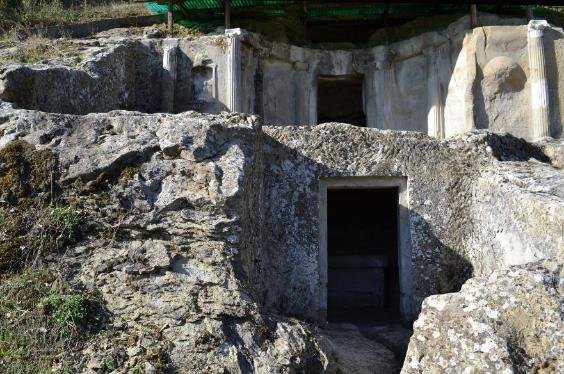
The settlement of Lower Selca (Gradishta e Selcës), near Pogradec, lies on the right bank of the Shkumbin River and in antiquity occupied a strategic position, controlling the ancient route connecting Dyrrachium with Macedonia. The site is renowned for its monumental rock-cut tombs, carved into the mountainside with arched funerary chambers and imposing architectural façades. Archaeological finds (including reliefs of bukrania, helmets, and Illyrian-type shields) date the complex to between the 4th and 3rd centuries BCE. Based on their structure and decoration, these tombs are interpreted as the burial places of Illyrian kings, possibly Bardylis, the “First King of the Illyrians,” or his son Cleitus.
Conditions that gave rise to the event
The royal necropolis of Selca e Poshtme represents not only a funerary site but also a major collective enterprise, both economic and social, for the Illyrian community. Its construction required substantial effort — skilled artisans and laborers, materials and careful management of natural resources. On a social level, the tombs expressed the highest form of tribal identity and power, uniting the community around a common mission that transcended individual life. They served as ceremonial landmarks, symbols of unity and pride, and enduring signs of reverence toward ancestors and cultural heritage.
Message
True grandeur and glory are not bound to what is transient or material, but rather live on through memory and legacy left behind by people and leaders alike. By way of stone craftsmanship, perseverance and faith, human hands created that which transcends time: a symbol rooted in identity and bespeaking of the enduring dream for a better future.
The light that shines from within the rock symbolizes hope, the silent promise and powerful reminder that the spirit and history of a people can outlast physical time itself. At its heart, this story bespeaks of the eternity of values, the power of remembrance and the hope that continues to inspire generations to come.
Meaning in Today’s Context
In today’s context, this story invites us to preserve and respect our identity, history, and cultural and national values. It reminds us that true greatness is not measured solely by material power or temporary successes, but lies in the legacy we leave behind and in the collective memory carried from generation to generation. In a time when societies face challenges such as the loss of values, emigration, and social division, this message calls us to find strength in our roots and to work with patience and love to build a future that reflects the dreams of our ancestors—a future of meaning and dignity.
Bibliography
- Ceka, Neritan. Qyteti ilir pranë Selcës së Poshtme [The Illyrian city near Lower Selca]. Tiranë, 1985.
- • Institute of Folk Culture, field interviews and studies conducted in Selca, 1980–2020.
- Oral traditions recorded by archaeologists regarding Selca.
- Local narratives preserved by the oldest families of Selca e Poshtme, transmitted as part of the community’s living heritage and identity.