Event
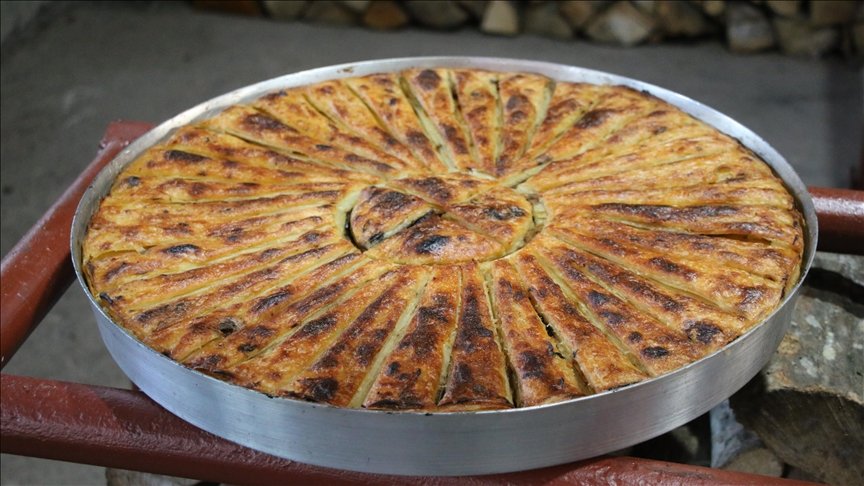
On a winter’s day, when the sky grows heavy with thick clouds and snow begins to fall softly, in a mountain home of Kukës, the preparation of flija begins. The oda — the main family room — is warmed by the fire alight since the early morning and around the hearth there gather the women of the household. On one side lies the dough thinned with water and a pinch of salt, while on the other, butter and cream are ready. The process is given a start by the eldest woman of the house. With her experienced hands, she spreads the first thin layer onto the iron saç heated over glowing embers. She does not rush for each layer needs its own time, its own patience, its own care. As the layers bake one atop the other, conversation flows easily. The women recall old times, hum forgotten songs and share stories from everyday life. The children, sitting nearby, listen in silence, hoping for a tale or the gentle touch of a grandmother’s hand. The aroma of melting butter fills the house, carrying with it a sense of warmth, togetherness and safety.
This is not merely a day of cooking, it is a day of communion. When the flija is finally ready, it is not served right away. The guest, if any is present, takes the first bite. Otherwise, the eldest of the household will be the one to taste it first, uttering a blessing for health and prosperity. Then, the dish is divided carefully among all. There are no distinctions, for every slice is equal — often accompanied by fresh yogurt, cheese, jam or honey, depending on each person’s taste.
Though Kukës preserves one of the purest and most traditional forms of flija, in regions such as Tropoja, Has or Puka, women may add an egg to the dough or vary the method of baking. Some serve it with jam, others with boiled milk. Yet the essence remains the same: flija is a food that demands time, patience and love — love for the guest, for the family, for life itself.
This is not merely a day of cooking, it is a day of communion. When the flija is finally ready, it is not served right away. The guest, if any is present, takes the first bite. Otherwise, the eldest of the household will be the one to taste it first, uttering a blessing for health and prosperity. Then, the dish is divided carefully among all. There are no distinctions, for every slice is equal — often accompanied by fresh yogurt, cheese, jam or honey, depending on each person’s taste.
Though Kukës preserves one of the purest and most traditional forms of flija, in regions such as Tropoja, Has or Puka, women may add an egg to the dough or vary the method of baking. Some serve it with jam, others with boiled milk. Yet the essence remains the same: flija is a food that demands time, patience and love — love for the guest, for the family, for life itself.
There is no audio content available. Add an audio URL in the admin panel.
There is no video content available. Add a video URL in the admin panel.
Historical period:
From early historical times to the present day, flourishing particularly during the 19th–20th centuries.
Historical overview of the period
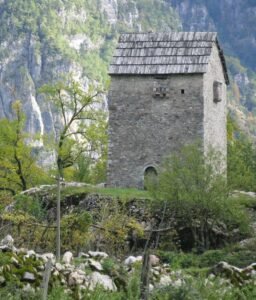
In the highlands of Kukës, where snow descends early and lingers until late in the spring, with roads vanishing under the white cover and where the solitude of winter deepens human bonds, traditions arose that kept alive the spirit of community. In this rugged landscape where life demands endurance and resilience, there took shape one of the most emblematic dishes of Albanian heritage: flija. Made from the simplest ingredients yet prepared with devotion, flija is far more than food. It is an expression of generosity, hospitality and domestic warmth — a mirror of the northern Albanian soul.
Conditions that gave rise to the event
Life in Kukës and across northern Albania has never been easy. The cold climate, mountainous terrain and long periods of isolation fostered a lifestyle rooted in self-reliance and communal support. Every resource was used wisely. Flour, butter and cream — staple products of any household — became the foundations of flija. Other than its simple ingredients, it is the method of preparation that gives flija its unique character and imbues it with meaning. Flija was not an everyday meal; it was reserved for special occasions — weddings, feasts and the arrival of a rare and honored guests.
Message
Flija is not just a dish — it is a symbol. It is a test of patience, requiring hours of attentive work. It is a gesture of hospitality, prepared not for everyone, but for those who matter. It is an act of care, each layer spread by hand, with thought and tenderness, to make the guest feel welcome. In a society enduring hardships and sweeping changes, flija has persisted as a form of cultural resilience — a proof that beauty can arise from simplicity. It stands as a reminder that tradition lives not only in rituals or monuments, but also in the warmth of a shared meal.
Meaning in Today’s Context
Today, when everything is done in haste and meals are often quick, "flija" reminds us of another time — a time when things were made slowly, with patience and love. In Kukës and the surrounding areas, flija festivals have become a way to remember and celebrate this heritage. The elderly women who prepare it in front of tourists are not simply demonstrating a recipe; they are sharing a piece of the soul of this land. And when visitors taste it for the first time and feel at home, they realize that flija is not just food — it is a warm embrace from a culture that cherishes humanity.
Bibliography
- Cenolli, Arsim. Flija. Cuneus, 2018.