Albanian woman comes through artistic stained glass and amazes Elbasan with unique exhibition
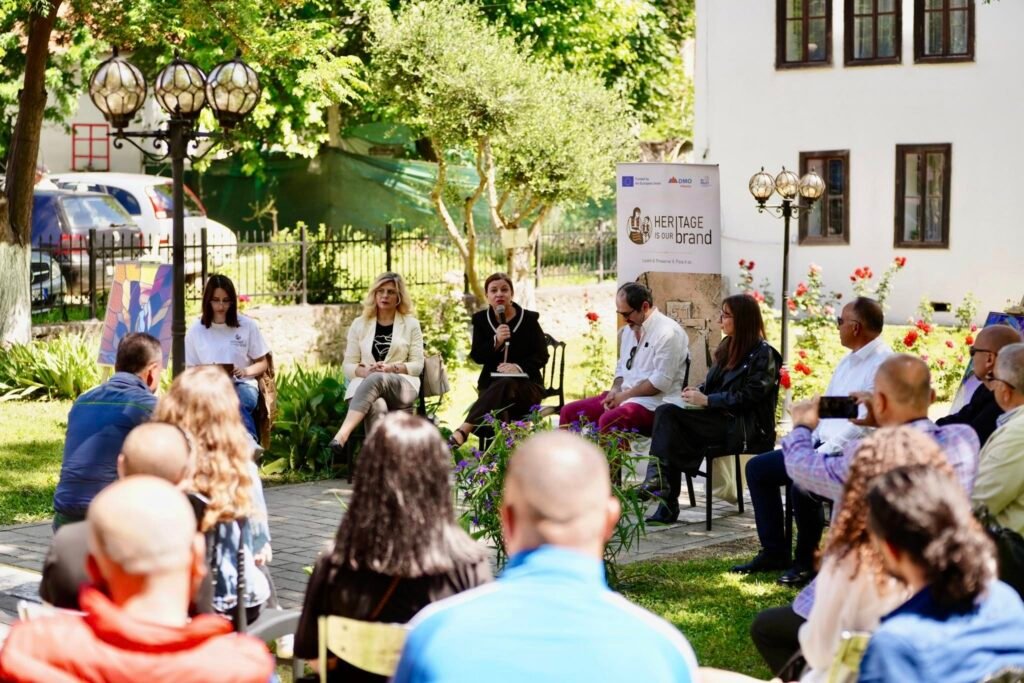
The square in front of the entrance to the Ethnographic Museum in Elbasan yesterday afternoon turned into a living space of memory and emotions through the exhibition “The Light of Memory through Legends in Glass”, opened by artist Kreshnik Belba. During this event, an atmosphere prevailed where Albanian art, history and spiritual heritage were combined in an extraordinary way.
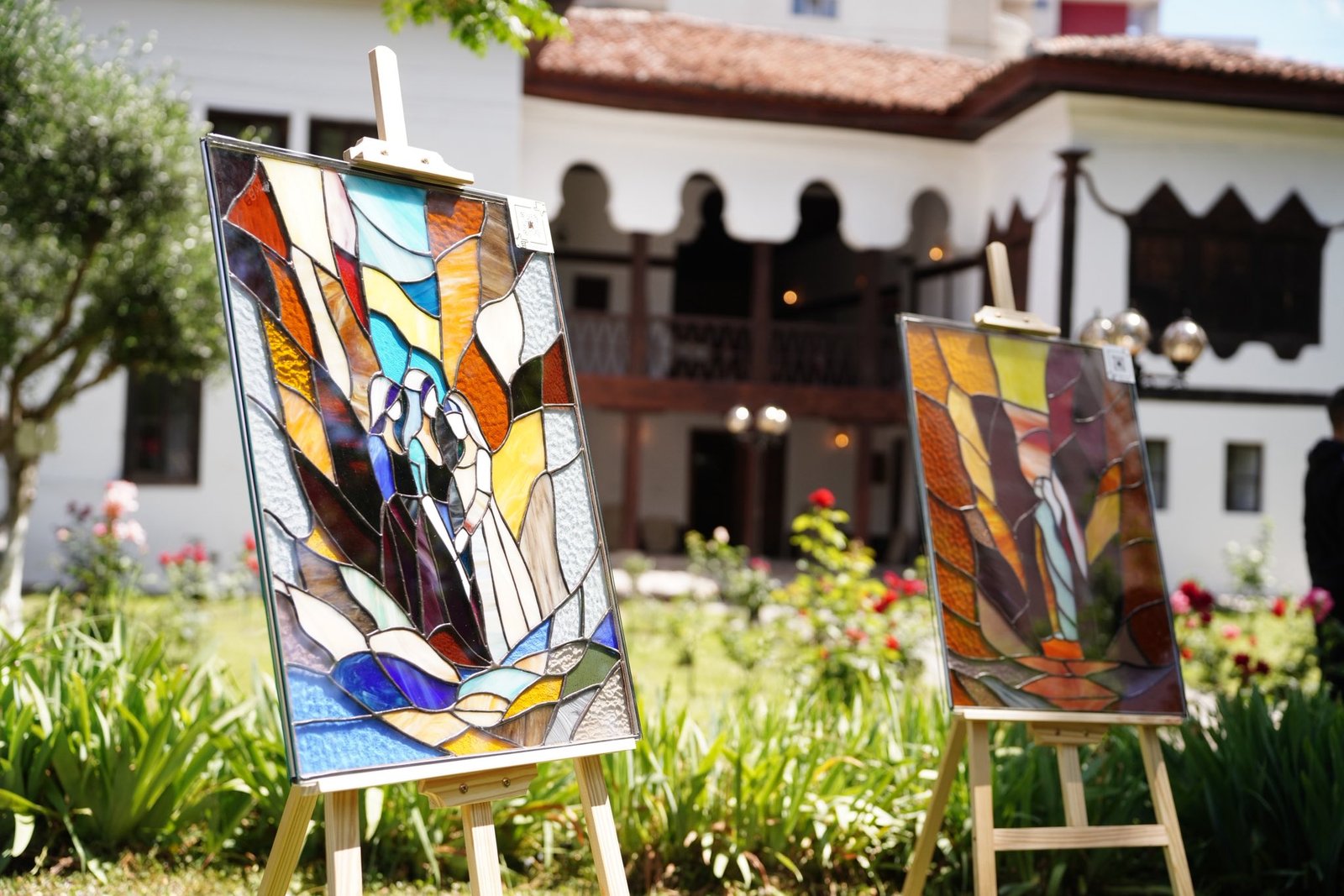
Under the symbolic motto “Legends that Return to Glass”, the artist brought to the public a unique exhibition with the special technique of artistic stained glass, presenting the cycle of works entitled “The Girl Who Chooses”. Through light, color and transparency of glass, Belba managed to bring back to life four Albanian legends filled with sacrifice, strength and national identity. The
The exhibition was held within the framework of the DMO Albania and EU Policy Hub project “Heritage is Our Brand”, a two-year project funded by the European Union, which aims to promote and educate young generations with the Albanian spiritual heritage through art, culture and tourism.
Kreshnik Belba’s works were inspired by four important legends of the project: Holta Canyon, Vrima e Nuses, Dance of the Nymphs of Apollonia and Gryka e Vajës. All these stories have at their core the figure of the Albanian woman and her sacrifice for freedom, dignity and love for the country. Through the stained glass technique, the artist managed to transmit not only the aesthetic beauty of the legends, but also the emotion and message that they carry across generations.
These legends are part of 40 stories prepared by the project “Heritage is Our Brand”, which promote the spiritual and cultural wealth of Albania. The stories can be found on the official platform albaniaheritage.com, where the story of Maximus Sabidius and the Egnatia Road is also published, a story inspired by the unique tombstone of the Roman legionnaire located in the premises of the Ethnographic Museum of Elbasan. This historical and cultural connection was the reason why the activity was organized in this museum with special values for the city.
At the opening of the activity, Megi Marku greeted the attendees, while the Director of DMO Albania, Eva Kushova, spoke about the importance of Albanian spiritual heritage and how it can be transformed into an important asset for the development of cultural tourism.
She emphasized that legends, traditions and rituals are part of our national identity and represent a powerful message passed on from past generations to new generations.
“Legends are our spiritual memory. They carry stories of sacrifice, love and strength, which must be preserved and transmitted through modern forms of art”, said Eva Kushova during the activity.
A very special moment was also the reading of the legend of “Via Egnatia – Ad Quintum”, created within the project and inspired by the tombstone of the legionnaire Maximus, preserved in the museum. This combination of ancient history and contemporary artistic interpretation gave the activity a special cultural and educational dimension.
On behalf of the Municipality of Elbasan, the Director of Cultural Heritage and Tourism, Artur Guni, praised the exhibition as a qualitative step in promoting our historical and cultural heritage through modern art.
He emphasized that bringing Albanian legends into contemporary artistic forms helps not only preserve cultural identity but also bring young people closer to their history and roots.
The artist Kreshnik Belba himself spoke about the creative process and the selection of these legends, explaining the importance of the stained-glass technique for conveying emotion and light through art.
He showed that each work required long hours of work and great artistic dedication to bring not only the figures and colors, but also the spirit of Albanian legends to the glass.
An important part of the activity was also the workshop held with young people, who had the opportunity to get to know the technique of working in artistic stained glass. The young people shared their impressions of this creative experience, describing it as inspiring and educational.
At the end of the activity, several project books with 40 stories of “Heritage is Our Brand” were donated to the Municipality of Elbasan and the Elbasan Ethnographic Museum, as a way to contribute to the preservation and promotion of the Albanian spiritual heritage.
After the joint photo, the exhibition moved to the Bezistan Plane Square, where visitors had the opportunity to enjoy the four legends worked on glass up close, as well as scan stories and videos that showed the process of their artistic realization.
Kreshnik Belba's exhibition will continue its journey to other cities in Albania, such as Durrës, Fier, Tirana and Shkodër, bringing a new way of seeing and experiencing our cultural heritage closer to the Albanian public.