
A nationwide survey conducted as part of the project “Heritage is our brand,” funded by the European Union and implemented by the EU Policy Forum and DMO Albania, has revealed that Albanian youth are interested and engaged in intangible cultural heritage; however, they face gaps in knowledge and access.
In the survey that included over 1,000 young people from all 12 districts of the country, aged 16 to 33, their knowledge, perceptions, and engagement in preserving cultural traditions such as songs, dances, dialects, and craftsmanship were evaluated. According to the results, 95% of them reflect commitment and interest in preserving and promoting this heritage.

Some of the young people do not clearly distinguish the definition of intangible heritage from that of tangible heritage, highlighting the need for broader education.
Some of the respondents mistakenly identified archaeological sites as intangible heritage, showing a certain confusion between tangible and intangible fields.
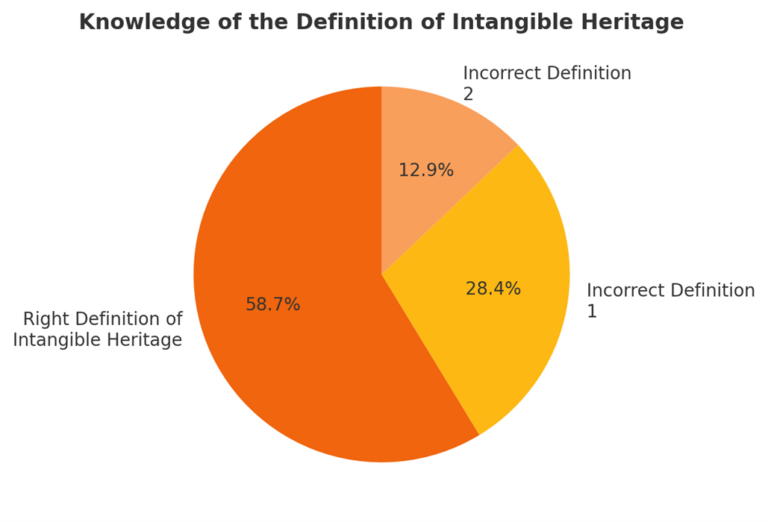
Only 58.7% of respondents recognized all categories of intangible cultural heritage, while 41.3% chose inaccurate definitions, showing the need for broader awareness.
The majority of young people seek deeper integration of heritage into school curricula, but only a few of them participate in cultural activities within schools.
Family and local events remain the main sources of transmitting traditions. The use of social media to highlight and learn about intangible heritage is increasing, although platforms dedicated to this field are still little known.
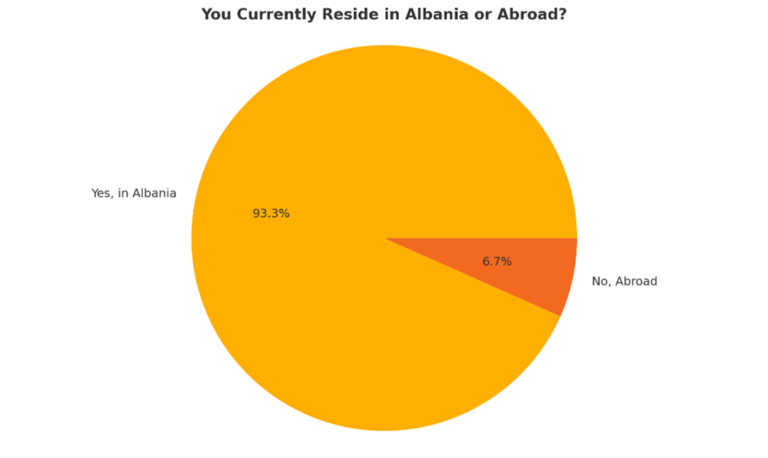
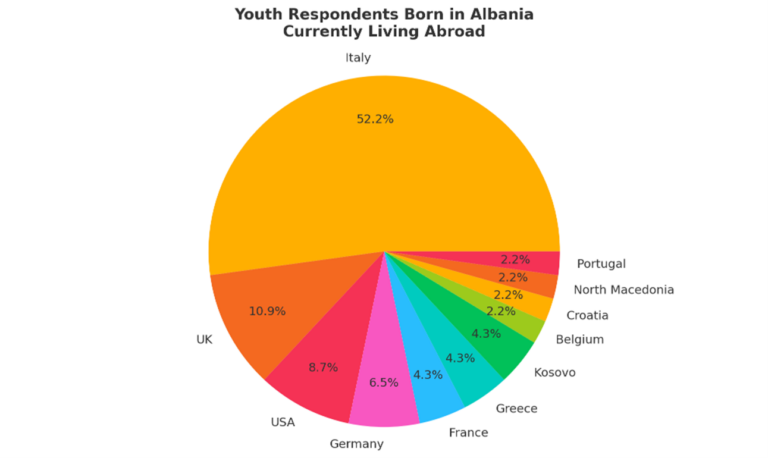
The data show that the overwhelming majority of the surveyed young people currently live in Albania (92.3%), while 7.7% live abroad.
The largest portion of respondents live in Tirana, accounting for 57.9%, while the Southern region makes up 24.3%, and the Northern region represents only 17.8%.
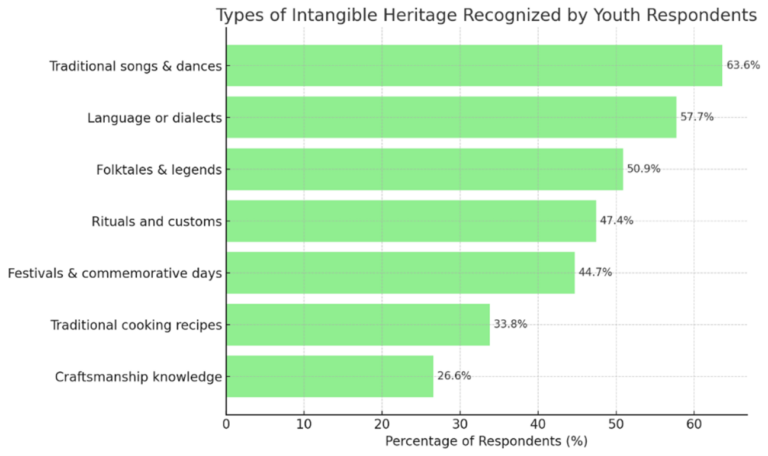
The results also show that songs, dances, and dialects are the most recognized forms, while craftsmanship remains less known.
64% of young people recognize traditional songs and dances as intangible heritage, 58% recognize dialects, 51% recognize fairy tales and legends, and only 27% recognize craftsmanship.
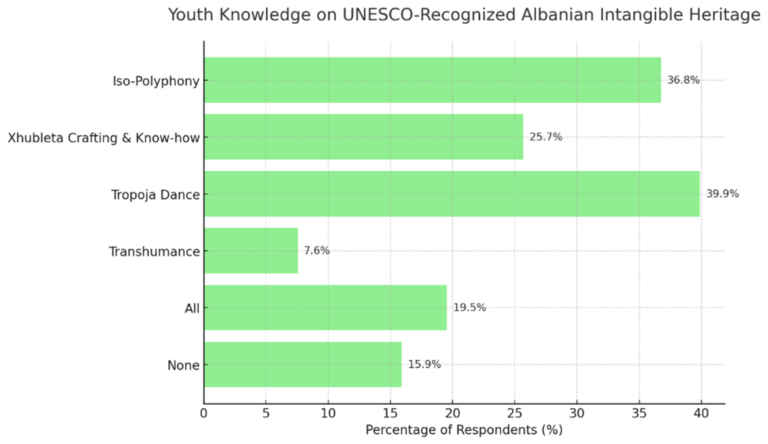
Young people have knowledge of Tropoja’s K’cim and isopolyphony, which are already part of UNESCO, while they show less knowledge of Xhubleta and Transhumance, which are not recognized even in their regions of origin.
Based on the findings, the report recommends increasing institutional efforts to integrate heritage into formal and informal education, as well as strengthening the role of communities and youth organizations.
This study comes at a time when Albania is advancing towards integration into the European Union and emphasizes the importance of preserving intangible cultural heritage as a national and international asset.
You can find the survey results in this. link: https://dmoalbania.al/wp-content/uploads/2025/06/survey-heritage-is-our-brand.pdf