Event
The sun had risen above the hills flanking the Via Egnatia. The newly built station of Ad Quintum hummed of travelers’ footsteps and of mingled voices of people from distant provinces, while the afternoon sun scorched the stones that paved its courtyard.
Weary soldiers, merchants laden with fine goods and silent peasants rested in the shade cast by the walls. Some waited their turn to refresh themselves in the baths, others awaited the caravans that would carry them onward. From the inn came the sound of clinking cups and the aroma of roasted meat wafting through the air.
At one table sat an elderly man, his back straight yet his gaze fixed somewhere far away. Marcus Sabidius Maximus—once a strong young man from Dyrrachium, now only a stranger in his own land, with deep wrinkles and hands twisted by time. When a group of younger travelers asked him about his sword and the belt marked with the legion’s emblem, he smiled faintly and began to speak.
— I no longer keep it for battle, he said, studying the weathered blade. Now it’s only a memory...
They listened intently, as he spoke with the calm of one who seeks not to boast, but simply to unburden himself of memories heavy on his weary shoulders. Maximus had spent his life among weapons. He reached for his cup and took a small sip, then glanced at the legionary belt hanging by his side.
— This sword has saved my life three times, he added softly. In Upper Moesia, in Syria and later in Dacia. For my bravery, Emperor Hadrian himself awarded me a medal of honor.
A medal of honor for victories—yet a heavy burden on the soul for the lives cut short. He no longer knew into which abyss that medal of valor had fallen, as his nights passed filled with restless dreams that lasted until dawn.
— They were never my wars, nor my battles! he murmured, eyes brimming with weariness and regret.
After all those years of war, he longed to spend the remainder of his life in peace, away from arms, away from pain. His tired heart sought rest: a place to hear the sounds of life, not its suffering…. a place to hide, under the shade of trees… a place to surrender to the quiet music of nature… And Scampa, with its soft hills and pure air, invited him to remain—as an apt final station for him, eternally…
As night fell over the inn at Ad Quintum, the clatter of cups and laughter mingled with the joy and exhaustion of travelers moving between East and West, who had found shelter by the Via Egnatia. The walls had heard a thousand stories—tales of bravery, defeats, dreams and griefs. As silence slowly settled over the surrounding hills, the Roman station stood as a silent witness to life that continued to hum… with dreams, novel journeys and hopes yet unbroken…
Weary soldiers, merchants laden with fine goods and silent peasants rested in the shade cast by the walls. Some waited their turn to refresh themselves in the baths, others awaited the caravans that would carry them onward. From the inn came the sound of clinking cups and the aroma of roasted meat wafting through the air.
At one table sat an elderly man, his back straight yet his gaze fixed somewhere far away. Marcus Sabidius Maximus—once a strong young man from Dyrrachium, now only a stranger in his own land, with deep wrinkles and hands twisted by time. When a group of younger travelers asked him about his sword and the belt marked with the legion’s emblem, he smiled faintly and began to speak.
— I no longer keep it for battle, he said, studying the weathered blade. Now it’s only a memory...
They listened intently, as he spoke with the calm of one who seeks not to boast, but simply to unburden himself of memories heavy on his weary shoulders. Maximus had spent his life among weapons. He reached for his cup and took a small sip, then glanced at the legionary belt hanging by his side.
— This sword has saved my life three times, he added softly. In Upper Moesia, in Syria and later in Dacia. For my bravery, Emperor Hadrian himself awarded me a medal of honor.
A medal of honor for victories—yet a heavy burden on the soul for the lives cut short. He no longer knew into which abyss that medal of valor had fallen, as his nights passed filled with restless dreams that lasted until dawn.
— They were never my wars, nor my battles! he murmured, eyes brimming with weariness and regret.
After all those years of war, he longed to spend the remainder of his life in peace, away from arms, away from pain. His tired heart sought rest: a place to hear the sounds of life, not its suffering…. a place to hide, under the shade of trees… a place to surrender to the quiet music of nature… And Scampa, with its soft hills and pure air, invited him to remain—as an apt final station for him, eternally…
As night fell over the inn at Ad Quintum, the clatter of cups and laughter mingled with the joy and exhaustion of travelers moving between East and West, who had found shelter by the Via Egnatia. The walls had heard a thousand stories—tales of bravery, defeats, dreams and griefs. As silence slowly settled over the surrounding hills, the Roman station stood as a silent witness to life that continued to hum… with dreams, novel journeys and hopes yet unbroken…
There is no audio content available. Add an audio URL in the admin panel.
There is no video content available. Add a video URL in the admin panel.
Historical period:
2nd century CE
Historical overview of the period
The Via Egnatia was an ancient Roman road following the valley of the Shkumbin River, built between 146 and 120 BCE by the Roman proconsul Gaius Egnatius, from whom it took its name. It was the eastern extension of the Via Appia, the famous road connecting Rome to the port of Brundisium. In present-day Albanian territory, it had two branches: one from Epidamnos–Dyrrachium, and another from Apollonia, merging near Scampa (Elbasan) before then continuing towards Thessalonica, ancient Macedonia and onward to Constantinople, traversing the Balkans for approximately 1,120 kilometers.
Conditions that gave rise to the event
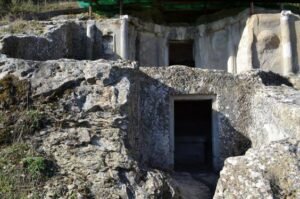
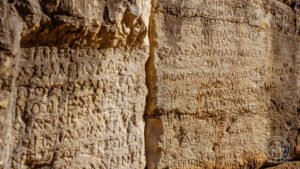
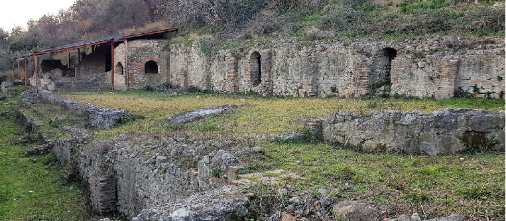
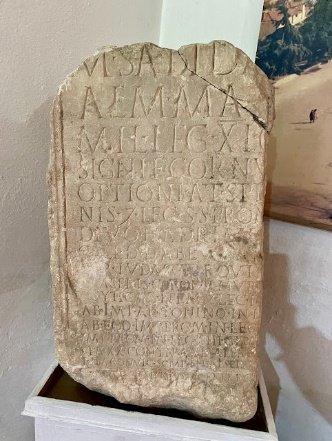
The Via Egnatia included several waystations, branching to start with Dyrrachium, then following Ad Quintum, linking to the complex of Roman baths and the nymphaeum at Bradashesh. These Roman stations were crucial points of rest, supply and lodging for travelers, soldiers and couriers during the imperial period. From the same period as the Ad Quintum station (2nd century CE) dates a funerary stele, now displayed in the Ethnographic Museum of Elbasan, belonging to Marcus Sabidius Maximus, of the Aemilia tribe, originally from Dyrrachium and a high-ranking officer in the Roman army. In the final years of his life, he settled in Scampa.
Message
Through a human story, this piece explores the layered symbolism of the Via Egnatia—a road that embodied the union of Eastern and Western civilizations. Along this route traveled not only people and goods but also ideas, beliefs and spiritual traditions. It reflects the dual nature of human history: destruction through countless wars waged by the legions, yet creation through the building and rebuilding that followed. The Via Egnatia thus stands as a metaphor of constant transformation—where the movement of people carried with it the movement of identities. It remains a cultural and historical heritage that connects the past with the present across all the lands it traverses.
Meaning in Today’s Context
In our time, Via Egnatia is more than an ancient road; it is a metaphor for connection and exchange between cultures and people. Via Egnatia reminds us that our paths, whether physical or spiritual, are bridges linking history with the present, and that through them the continuous transformation of our societies and identities endures.
Bibliography
- Anamali, Skënder; Ceka, Hasan; Deniaux, Élisabeth. Corpus des inscriptions latines d’Albanie, Rome, 2009.
- Ceka, Neritan; Papajani, Lazer. Nymfeu dhe termet e stacionit Ad Quintum [The Nymphaeum and the baths of the station Ad Quintum], Monumentet 4 (1973), pp. 29–53.
- Fasolo, Michele. Via Egnatia I. Da Apollonia e Dyrrachium ad Herakleia Lynkestidos, Rome, 2003.