Event
Long ago, in the deep heart of Epirus, amidst towering mountains and graceful winding valleys, there lived a young prince and warrior named Pyrrhus. After spending his early childhood at the court of Glaukias, king of the Taulantii, Pyrrhus set out for Alexandria — the city of learning and power. There, in the grandeur of King Ptolemy’s royal court, he met Antigone, daughter of Queen Berenice — a woman who would change the course of his life. She was unlike any woman he had known before. Antigone spoke with the strength of reason and the gaze of wisdom. She knew the language of books and of stars. She had walked beside philosophers and stood among poets.
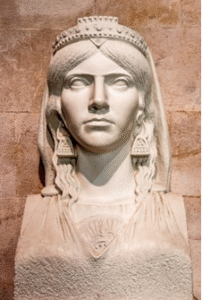
Pyrrhus, a warrior hardened by many battles, fell silent in front of the poetry of her soul. When he asked for her hand, she entrusted her heart to his. Together they returned to Epirus, and Pyrrhus was crowned king. Though in love, Pyrrhus had been born for war. Antigone remained by his side through every campaign. She was his peace.
To eternalize his love for her, Pyrrhus decided to found a city in her honor, on the highest hill rising above the valley of the Drinos.
The city grew day by day, as did the child she carried within her. One morning, before the mist had lifted, Antigone felt that the moment had come. Pyrrhus — who had faced death a hundred times — trembled like a child before the life that was about to be born. Alas the gods had woven a dark fate. Antigone could not survive the birth and died did she giving life to their son.
Ptolemy the Younger grew up in the streets of Antigonea, among the stones that still held the warmth of his mother’s hands. The city breathed with her spirit — a spirit of love for these distant lands that she had called home. Every square, every wall seemed to whisper her name.
He never knew his mother Antigone, but he saw her in dreams, he felt her presence in the breeze that caressed the hills, in the cool shade of the oaks rising by the city gates, in the songs of maidens when spring returned, and in the love with which she had built an entire city for him — before departing forever.
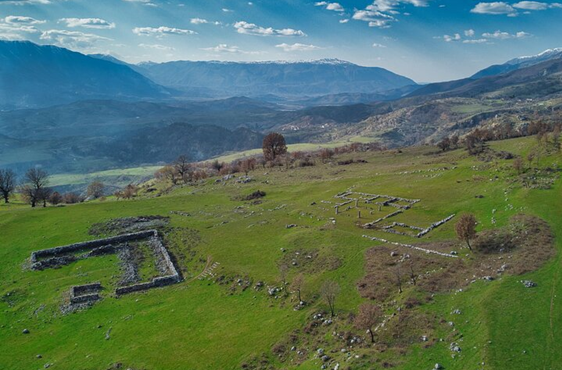
The city, born of love and sorrow, became an oasis of knowledge and wisdom, just as she would have wished. Today, the ruins of Antigonea still stand silent — yet not cold. They stand as a memory of a love not broken by death, but elevated through it.
Pyrrhus, a warrior hardened by many battles, fell silent in front of the poetry of her soul. When he asked for her hand, she entrusted her heart to his. Together they returned to Epirus, and Pyrrhus was crowned king. Though in love, Pyrrhus had been born for war. Antigone remained by his side through every campaign. She was his peace.
To eternalize his love for her, Pyrrhus decided to found a city in her honor, on the highest hill rising above the valley of the Drinos.
The city grew day by day, as did the child she carried within her. One morning, before the mist had lifted, Antigone felt that the moment had come. Pyrrhus — who had faced death a hundred times — trembled like a child before the life that was about to be born. Alas the gods had woven a dark fate. Antigone could not survive the birth and died did she giving life to their son.
Ptolemy the Younger grew up in the streets of Antigonea, among the stones that still held the warmth of his mother’s hands. The city breathed with her spirit — a spirit of love for these distant lands that she had called home. Every square, every wall seemed to whisper her name.
He never knew his mother Antigone, but he saw her in dreams, he felt her presence in the breeze that caressed the hills, in the cool shade of the oaks rising by the city gates, in the songs of maidens when spring returned, and in the love with which she had built an entire city for him — before departing forever.
The city, born of love and sorrow, became an oasis of knowledge and wisdom, just as she would have wished. Today, the ruins of Antigonea still stand silent — yet not cold. They stand as a memory of a love not broken by death, but elevated through it.
There is no audio content available. Add an audio URL in the admin panel.
There is no video content available. Add a video URL in the admin panel.
Historical period:
3rd century BCE
Historical overview of the period
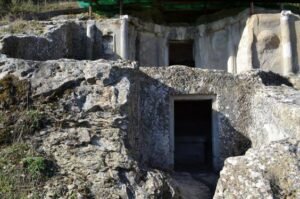
The ruins of the ancient city of Antigonea stand atop the ridge of Jerma Hill, southwest of the village of Saraqinisht, about 7 km east of Gjirokastra. It was the center of the Drino River basin. Antigonea, founded during the reign of Pyrrhus (297–295 BCE), the renowned king of Epirus, bears the name of his first wife, Antigone, adopted daughter of King Ptolemy I of Egypt. According to Stephanus of Byzantium (entry Ἀντιγόνεια), the city belonged to the region of ancient Chaonia, at a strategic point controlling the natural passes of the Drino valley between Epirus and Illyria.
Conditions that gave rise to the event
The city’s name, Antigonea, is testimony to Pyrrhus’s devotion to Antigone and to the important alliance forged through his marriage to the Ptolemaic dynasty (Plutarch, Pyrrhus). It was thanks to this alliance that he regained the throne of Epirus (Pausanias 1.11.5). Pyrrhus and Antigone had two children: a daughter, Olympias, and a son, Ptolemy Pyrrhus (or simply Ptolemy), named in honor of his maternal grandfather, Ptolemy I Soter, founder of the Ptolemaic dynasty in Egypt. Historical sources record that Antigone did not survive childbirth. It is believed that, in memory of his first wife, Pyrrhus founded the city of Antigonea.
Message
This story conveys a deeply human message, touching upon the many dimensions of love — that between a man and a woman and that of the sublime bond between a mother and her child. Antigonea also symbolizes the human confrontation with pain and loss, while reflecting a strategic alliance between Egypt and Epirus, two major powers of their time. The founding of the city was at once an act of love, remembrance and diplomacy. Love and memory may find cities — but they become living heritage only when vision, politics and history intertwine.
Meaning in Today’s Context
The founding of Antigonea as a city built in the name of Pyrrhus’s wife can today be seen as a rare and significant gesture, rooted in love, appreciation, and respect for a life companion, even though their shared life was very brief. From the perspective of political alliance, it is also an example of clear-sighted political cooperation, which builds bridges and creates stability.
Bibliography
- Budina, Dhimosten. Antigonea: Rezultatet e gërmimeve 1966–1970 [Antigonea: Results of the excavations 1966–1970], Iliria 2 (1972), pp. 269–378.
- Budina, Dhimosten. Harta arkeologjike e luginës së Drinosit [Archaeological map of the Drino valley], Iliria 3 (1974), pp. 354–392.
- Budina, Dhimosten. Antigonée d’Épire, Iliria 4 (1976), pp. 327–335.
- Budina, Dhimosten. Le lieu et le rôle d’Antigonea dans la vallée du Drino, in P. Cabanes (ed.), L’Illyrie méridionale et l’Épire dans l’antiquité, Proceedings of the Clermont-Ferrand Colloquium (1987), pp. 159–166.